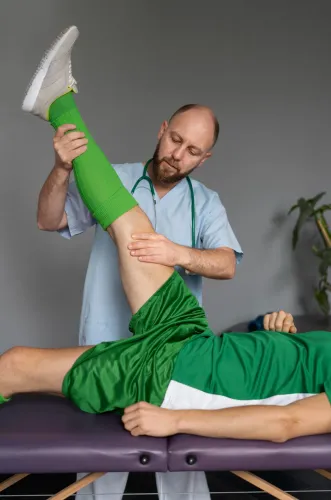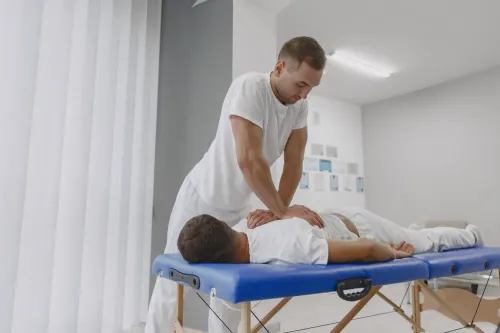

Neurological conditions can affect movement in many different ways. A person may experience weakness, stiffness, poor coordination, altered balance, difficulty walking, or reduced ability to perform familiar daily activities. Neurological Rehabilitation uses structured physiotherapy to work on these functional difficulties according to the individual's condition and abilities.
In Vadodara, rehabilitation may support people recovering from or living with neurological conditions where movement and independence have been affected.
What Does Neurological Physiotherapy Address?
The nervous system plays a central role in controlling movement. When the brain, spinal cord, or peripheral nerves are affected, movement patterns can change.
Depending on the diagnosis and clinical recommendations, physiotherapy may address:
- Muscle weakness
- Reduced balance
- Walking difficulties
- Changes in muscle tone
- Poor coordination
- Reduced endurance
- Difficulty with transfers
- Limitations in everyday mobility
The treatment plan needs to be individualised because neurological conditions do not affect every person in the same way.
Repetition Has an Important Role
Functional improvement often requires regular practice.
Rather than focusing only on isolated movements, rehabilitation may incorporate practical activities such as rolling in bed, sitting, standing, transferring, reaching, stepping, or walking.
Repetition allows the individual to practise movement strategies under controlled conditions. The complexity can then be adjusted according to progress.
Balance and Walking Need Careful Assessment
Walking difficulties may result from several interacting factors, including weakness, reduced coordination, stiffness, poor balance, or fear of falling.
For that reason, simply asking someone to walk more may not address the underlying problem.
A physiotherapist can assess components such as standing stability, step pattern, lower-limb control, turning, and the ability to manage different surfaces. Suitable exercises can then target the areas that are limiting mobility.
Family Support Can Influence Rehabilitation
Neurological rehabilitation often extends beyond scheduled sessions. Family members or caregivers may help with safe practice, positioning, transfers, or prescribed exercises where appropriate.
Clear guidance is important because excessive assistance can sometimes limit a person's opportunity to practise independence, while insufficient assistance can create safety concerns.
Home layouts in Vadodara may also need consideration when mobility has changed. Steps, narrow spaces, bathrooms, floor surfaces, and frequently used areas can affect how easily a person moves through the home.
Neurological rehabilitation is generally a gradual process rather than a quick intervention. Goals may range from improving a specific movement to increasing independence in everyday activities. Regular assessment helps ensure that exercises remain appropriate as abilities, needs, and functional priorities change.
Keywords