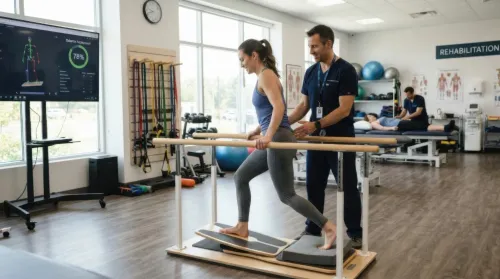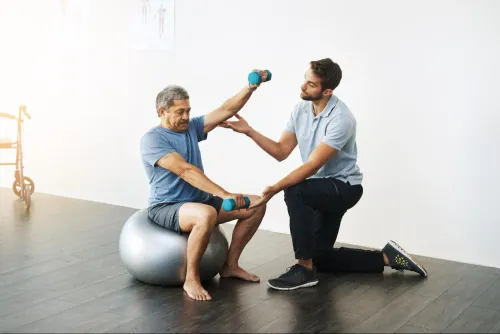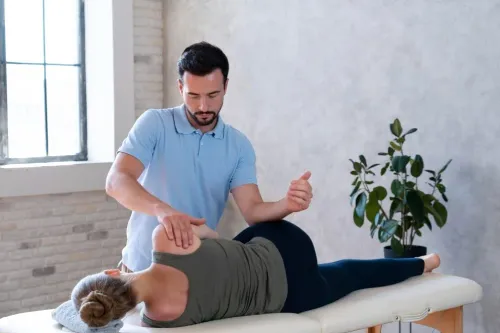
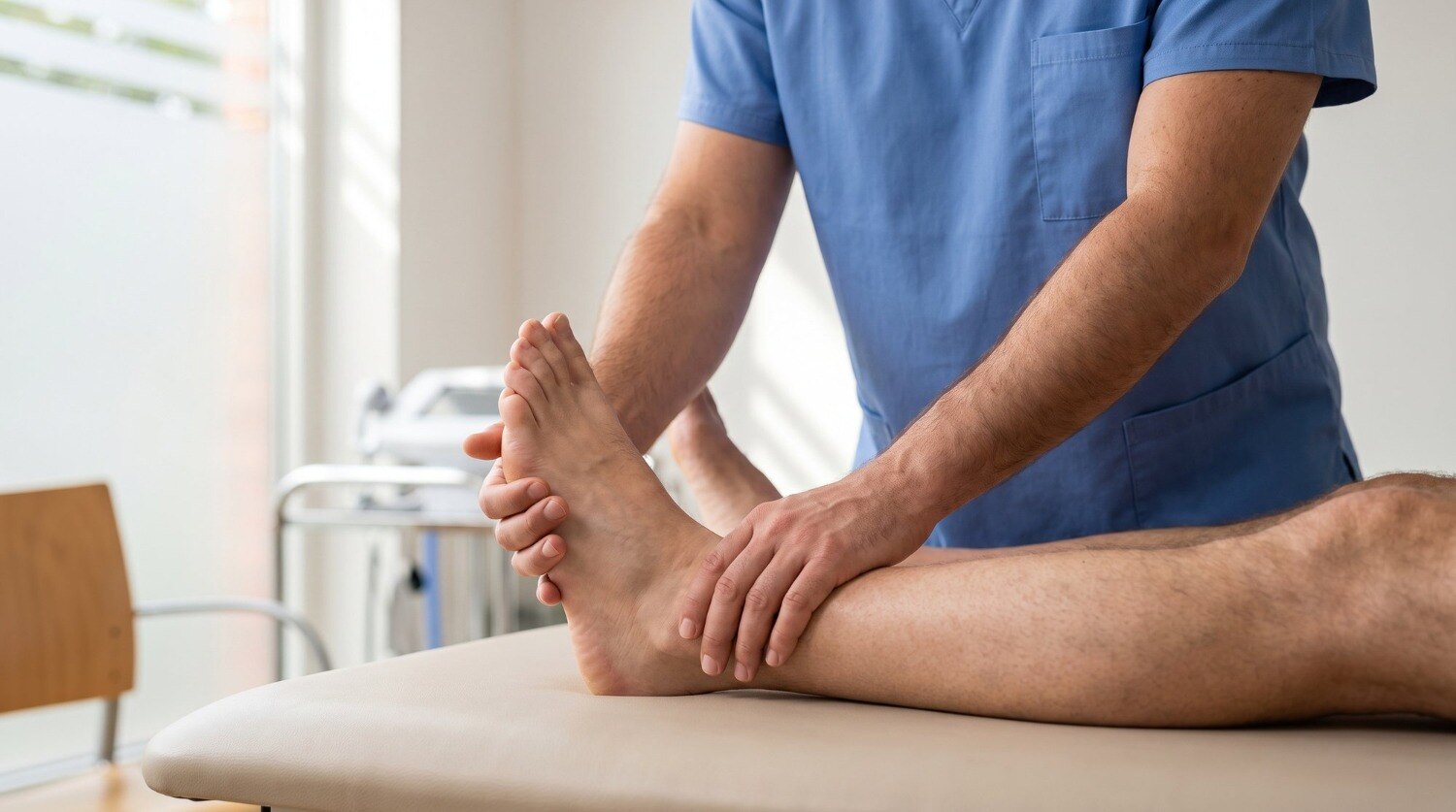
Hands-on treatment can reduce pain and restore movement after a ligament or sports injury, but it cannot reattach a completely torn ligament or replace progressive rehabilitation. You will learn how therapists screen the injury, when manual techniques are safe, and how to judge whether treatment is preparing you for normal activity or a return to sport.
Key takeaways
- Manual therapy can improve movement but cannot reattach a completely torn ligament.
- Begin hands-on treatment only after injury severity and healing stage are assessed.
- A return-to-sport plan should test strength, movement, balance and sport-specific control.
- Choose ligament injury physiotherapy that includes progressive exercise, not hands-on care alone.
What does manual therapy do for a ligament injury?
Manual therapy for ligament injury is hands-on care used to improve movement and make rehabilitation more tolerable. It can reduce symptoms briefly and help you use the injured joint, but it does not mechanically reattach a completely torn ligament.
- Joint mobilisation to reduce stiffness and improve available movement
- Soft-tissue mobilisation to ease muscle and connective-tissue restriction
- Assisted range-of-motion work when active movement is painful or limited
- Scar mobilisation after an incision has healed sufficiently
- Swelling management through gentle hands-on techniques and positioning guidance
After an ankle sprain, these methods may temporarily reduce pain, improve ankle dorsiflexion, make weight-bearing easier and improve walking or other basic function. The therapist selects the technique and intensity according to irritability, stiffness, swelling, tissue-protection needs and post-operative restrictions. Aggressive stretching or high-grade mobilisation can worsen an acutely inflamed, unstable or healing joint.
Effective ligament injury physiotherapy pairs manual care with progressive resistance exercise, balance and proprioceptive training, neuromuscular control work and sport-specific loading. Manual treatment is an adjunct, not a replacement for bracing, graded exercise or surgical protection when those are indicated.
Feeling better immediately after a session does not prove that the ligament is stable or ready for sprinting, cutting, jumping or contact. Pain can settle before strength, coordination and tissue tolerance return, so readiness requires reassessment during progressively harder tasks.
Which ligament and sports injuries may benefit from hands-on treatment?
A grade I, II or III sprain is not a complete diagnosis. The grade describes ligament damage severity; treatment also depends on the involved structure, joint instability, fracture, dislocation, meniscal or cartilage damage, previous injury and sport demands.
ACL injuries, MCL and LCL injuries, lateral ankle sprains, wrist sprains and shoulder ligament injuries require different decisions. A search for manual therapy ligament sports injury in vadodara should not imply one protocol fits all.
| Option | What it does | When it applies |
|---|---|---|
| Manual therapy | May reduce pain, stiffness and swelling and improve movement so exercise is tolerable; it cannot reattach a torn ligament | As an adjunct after serious injury has been assessed |
| Brace or tape | Limits risky movement and supports protected loading | Uncomplicated ankle sprains, unstable joints and return to high-risk activity |
| Exercise therapy | Restores strength, balance, proprioception and sport-specific control | Throughout rehabilitation, including ACL recovery |
| Surgery | Repairs or reconstructs selected injuries | Persistent instability, associated damage or sport goals requiring stability |
| Rest and wait | Reduces activity but does not rebuild capacity | Brief protection only; prolonged inactivity causes weakness and stiffness |
Uncomplicated lateral ankle sprains generally do better with early protected weight-bearing in a brace or tape than prolonged immobilisation. Recurrent sprains or high-risk sports warrant external ankle support alongside lower-limb strengthening, balance and agility work.
ACL management depends on instability, associated meniscal or cartilage injury, activity goals and willingness to complete lengthy rehabilitation—not on manual therapy versus surgery alone. Ligament injury physiotherapy should match those findings rather than sell a fixed hands-on protocol.
When is manual treatment safe after a sprain, tear or operation?
A safe dose of hands-on care changes with the rehabilitation phase. Manual therapy for ligament injury should support recovery, not test an unstable joint or attempt to “put the ligament back in place.”
- Protection: Immediately after injury or surgery, use gentle, pain-limited movement, assisted range of motion and swelling management when permitted. Avoid aggressive stretching, high-grade mobilisation and forceful manipulation while the joint is acutely inflamed, unstable or undiagnosed.
- Controlled loading: Begin light weight-bearing and movement once pain, swelling and joint stability permit. Increase the load gradually; a flare in pain or swelling means the current dose is too high.
- Strengthening: Progress to resistance, balance and neuromuscular exercises when movement and weight-bearing improve. Hands-on treatment may reduce stiffness, but it cannot mechanically reattach a torn ligament.
- Return to sport: Add hopping, running, cutting, jumping and contact tasks only when the joint tolerates progressively harder work without renewed swelling or instability.
Postpone treatment and arrange medical assessment for suspected fracture, dislocation, gross instability, infection, numbness or loss of circulation, rapidly increasing swelling or pain, or an unhealed surgical repair.
The Ottawa Ankle Rules support radiography for tenderness at the posterior edge or tip of either malleolus, the base of the fifth metatarsal or navicular, or inability to take four steps immediately after injury and during assessment.
For sports injury management in Vadodara, follow the surgeon’s restrictions after reconstruction; they override routine manual therapy plans.
What should an assessment and rehabilitation plan include in Vadodara?
Before hands-on treatment, expect an examination of the injury mechanism, exact pain location, swelling, bruising, range of motion, ligament stability, strength, sensation and circulation. The clinician should also test walking tolerance, running tolerance and the demands of your sport, rather than treating every sprain alike.
| Finding | Why it matters | What the plan should address |
|---|---|---|
| Pain, swelling or bruising | Indicates irritability and possible tissue damage | Protection, symptom monitoring and safe movement |
| Limited motion or weight-bearing | Shows the current functional baseline | Home exercises and loading limits |
| Instability or weakness | Raises concern about ligament support and reinjury | Bracing, taping, strengthening or referral |
| Abnormal sensation or circulation | May indicate nerve or blood-vessel involvement | Prompt medical assessment |
| Sport-specific difficulty | Identifies the demands you must regain | Running, cutting, jumping or contact drills |
Your written plan should name the suspected structure, state whether imaging or orthopaedic referral is needed, prescribe home care, set criteria for loading progression and identify findings that trigger review. Worsening pain or swelling, new instability, loss of sensation, poor circulation or failure to improve should not be managed by adding manual sessions.
For sports injury rehabilitation in Vadodara, a clinic such as Physiospace By Dr. Pratiksha should explain why each hands-on technique is being used, how exercises will advance, whether bracing or taping is needed, when reviews occur and where referral boundaries lie.
Sports injury management in Vadodara should be individualised—not sold as a fixed number of manual therapy sessions.
Related service
Orthopedic Rehabilitation Ligament & Sports Injury Management Physiotherapy in Vadodara Recover faster and return to your active lifestyle with professional Ligament & Sports Injury Management Physiotherapy... View service → |
How do you know you are ready to return to sport?
Reduced swelling or a calendar date cannot approve your return to sport. You need evidence that the joint tolerates sport demands, not simply that it looks better.
1. Check movement and stability. Your injured joint should have full or near-full range of motion, with no meaningful ligament laxity compared with the uninjured side. Test strength against the opposite limb, because weakness can persist after pain settles.
2. Load the joint progressively. Assess pain and swelling after running, hopping, landing and change-of-direction tasks. Poor control, guarding, limping or symptoms later that day indicate that the tissue is not ready for full play.
3. Add sport-specific drills. Progress from resistance training and balance work to agility, landing control, sprinting, cutting, jumping and, when appropriate, contact. A pain-free treatment session does not prove that the ligament can withstand competition.
4. Check psychological readiness. Fear of reinjury, hesitation during a cut or unwillingness to load one side can reduce performance and increase risk, even when clinical tests look acceptable.
5. Prevent recurrence. After an ankle sprain, continue lower-limb strengthening and proprioceptive training, and consider a brace or tape during high-risk activities, especially with previous sprains.
Manual therapy ligament sports injury in Vadodara care may ease residual stiffness or help you tolerate exercise; it cannot replace rehabilitation. In sports injury rehabilitation in Vadodara, the therapist should repeat functional tests under harder loads before clearance. Tests and pass thresholds vary by ligament and sport.
Frequently asked questions
What does manual therapy do for a ligament injury?
It uses hands-on techniques to improve joint movement, reduce symptoms briefly and make rehabilitation easier. It cannot mechanically reattach a completely torn ligament.
Which ligament and sports injuries may benefit from hands-on treatment?
Selected sprains, ligament injuries and sports injuries may benefit after assessment confirms that movement treatment is appropriate for the injury and healing stage.
When is manual treatment safe after a sprain, tear or operation?
Safety depends on the injury’s severity, healing stage, symptoms and any surgical instructions. A physiotherapist should assess you before treatment, especially after an operation or suspected complete tear.
What should an assessment and rehabilitation plan include in Vadodara?
It should identify the injured structure, measure pain and movement, assess strength and function, and set progressive exercises with clear review points.
How do you know you are ready to return to sport?
Readiness requires satisfactory movement, strength, balance and sport-specific control without a symptom increase during or after testing.
Keywords