Balance problems during pregnancy, after childbirth, around menopause or after pelvic surgery need more than a generic list of standing exercises. You will learn how women’s health physiotherapy changes the assessment, exercise selection and safety precautions, and how to choose balance training that matches your symptoms and medical history.
Key takeaways
- Pelvic-floor symptoms can change which balance exercises are appropriate.
- Pregnancy, menopause and surgery require different balance-training considerations.
- Use a wall or stable chair when practising balance exercises at home.
- Ask about pelvic health screening, exercise progression and clinician qualifications.
What women’s health physiotherapy adds to balance training
Women’s health physiotherapy adds pelvic, reproductive, hormonal and bone-health assessment to balance rehabilitation. It is not synonymous with Kegel exercises. The assessment may include urinary or faecal leakage, pelvic-organ-prolapse symptoms, pelvic pain, sexual pain, pregnancy-related musculoskeletal changes, abdominal-wall function, breathing strategy and post-operative scars.
| Approach | Main focus | What women’s health physiotherapy adds |
|---|---|---|
| General balance rehabilitation | Strength, gait, coordination and standing control | Links balance findings to pelvic-floor symptoms, pain, pregnancy, surgery and bone health |
| Neurological rehabilitation | Balance affected by stroke, Parkinson’s disease, neuropathy or other neurological injury | Screens pelvic and obstetric factors without replacing neurological assessment |
| Geriatric rehabilitation | Falls, frailty, medication effects, strength and confidence | Adapts training to menopause, osteoporosis, vertebral-fracture history and pelvic symptoms |
| Women’s health rehabilitation | Life-stage and pelvic-health factors influencing movement and exercise tolerance | Combines progressive balance and strength work with symptom control, support and referral |
During pregnancy, a shifting centre of mass, altered posture, joint laxity and reduced foot or ankle stability can make a copied athletic programme unsafe. Balance physiotherapy for women uses stable supports, graded difficulty and fall-prevention modifications.
Around menopause, resistance, weight-bearing and balance exercise can protect function more effectively than stretching alone, while osteoporosis requires fracture-aware choices that avoid unsuitable impact, loaded spinal flexion or forceful twisting.
When comparing women health physiotherapy in Vadodara, ask for baseline function, measurable goals and documented safety advice. Confirm a referral pathway for unexplained fainting, new neurological symptoms, acute severe vertigo, suspected fracture or cardiopulmonary warning signs.
Women’s health conditions that can change balance and exercise tolerance
Pregnancy-related changes, pelvic symptoms, menopause, bone fragility, vestibular disorders and gynaecological surgery all require different balance and exercise-tolerance decisions. These conditions can alter stability, strength, breathing, pain levels and fall risk.
| Condition | How it can affect balance or tolerance | Programme implication |
|---|---|---|
| Pregnancy | A shifting centre of mass, altered posture, joint laxity and reduced ankle stability can increase sway. | Use stable supports, wider stance and gradual difficulty; avoid copying a non-pregnant athlete’s routine. |
| Postpartum pelvic-floor or abdominal symptoms | Weakness, pelvic heaviness, urinary or faecal leakage, pelvic pain and abdominal-wall symptoms can worsen with impact. | Progress walking, balance and running by symptoms; reduce load and seek pelvic-health assessment if symptoms increase. |
| Menopause | Muscle loss, sleep disruption, hot flushes and declining bone density can reduce confidence and exercise tolerance. | Build strength, reaction time and balance while monitoring fatigue, dizziness and joint pain. |
| Osteoporosis or vertebral fracture | A fall has greater fracture consequences, and spinal loading can aggravate vulnerable areas. | Pair fall prevention with fracture-aware exercise; avoid high impact, loaded spinal flexion and forceful twisting when unsuitable. |
| Vestibular disorder | Spinning vertigo, visual dependence or motion sensitivity can make generic drills ineffective or unsafe. | Arrange vestibular or medical assessment before progressing balance work. |
| Gynaecological surgery | Pain, scars, reduced abdominal-wall function and deconditioning can limit movement. | Restore breathing, trunk control and walking gradually after surgical guidance. |
Searches for women health physiotherapy in vadodara should not reduce care to Kegel exercises. Balance physiotherapy for women should also screen vision, proprioception, orthostatic symptoms, medicines and footwear; fainting, new neurological symptoms or acute severe vertigo need referral.
How assessment and exercise selection should change by life stage
Assessment changes by life stage because pregnancy shifts the centre of gravity, childbirth can alter pelvic and abdominal control, and menopause can increase weakness and fracture consequences. A proper starting point includes falls history, gait, sit-to-stand ability, single-leg control, foot and ankle stability, dizziness, blood pressure symptoms, pain, pelvic-floor function and breathing strategy.
Functional tests should produce measurable goals, not just a list of standing exercises.
| Stage | Assess | Appropriate balance work |
|---|---|---|
| Pregnancy | Posture, joint laxity, pelvic or back pain, foot stability, dizziness and fall hazards | Supported weight shifts, heel-to-toe walking, sit-to-stand and step practice near a stable surface; avoid unstable challenges that increase fall risk |
| After childbirth | Urinary or faecal leakage, pelvic heaviness, pelvic pain, sexual pain, abdominal-wall separation or bulging, scars, breathing and strength | Begin with walking, supported single-leg loading, controlled sit-to-stands and low step-ups; progress to impact or running only when symptoms remain settled during and after exercise |
| Around menopause | Strength, activity level, bone-health history, vertebral fracture, pain, dizziness and previous falls | Progressive resistance, weight-bearing work, tandem walking, step-ups and reaching tasks; use fracture-aware technique and avoid loaded spinal flexion or forceful twisting when indicated |
After childbirth, leakage, heaviness, pain or worsening abdominal symptoms mean reduce load and obtain pelvic-health assessment. They are not a reason to train harder.
When comparing women health physiotherapy balance training in vadodara, ask for documented baseline measures and goals. Good balance training in vadodara also includes referral for fainting, new neurological symptoms, severe vertigo, suspected fracture or cardiopulmonary warning signs.
How to practise balance exercises safely at home
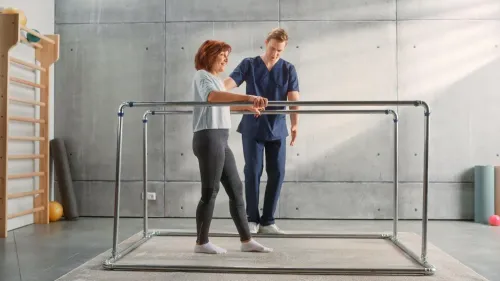
Practise beside a kitchen counter or sturdy rail, with a clear floor, supportive footwear and someone nearby if you have fallen before. Keep a phone within reach; do not use a loose chair, step stool or towel as support.
1. Start with a falls-risk check. Record how long you can stand, whether you need hand support, and any dizziness, pain or pelvic symptoms. During pregnancy, use stable support because your centre of mass, gait and joint stability change.
2. Begin with both feet supported, then progress to a narrow stance, heel-to-toe stance and controlled weight shifts. Change only one factor at a time: reduce hand support, narrow your feet, add head movement or increase repetitions.
3. Breathe normally and keep the effort moderate. Stop if you hold your breath, bear down, leak urine or stool, feel pelvic heaviness or a vaginal bulge, or develop pelvic pain. These signs call for a personalised review rather than more Kegel exercises.
4. If you have osteoporosis or a suspected fracture, avoid jumping, forceful twisting and repeated loaded spinal bending until assessed. Around menopause, combine balance practice with progressive strengthening instead of stretching alone.
Balance physiotherapy for women should include documented goals and functional measures, not a generic exercise sheet. Ask a provider offering balance training in Vadodara to refer you for unexplained fainting, new neurological symptoms, acute severe vertigo, suspected fracture, chest pain or unusual breathlessness.
What to check before choosing women’s health balance physiotherapy in Vadodara
Ask a provider offering women health physiotherapy balance training in vadodara to record your starting point before prescribing exercises. The notes should include fall history, near-falls, medicines, pregnancy or postpartum stage, menstrual or menopausal status, osteoporosis or vertebral-fracture history, dizziness, pelvic symptoms, pain and previous surgery.
Ask for goals with numbers, such as standing for 30 seconds, walking 10 metres or climbing six steps.
| Check | Generic approach | Tailored approach |
|---|---|---|
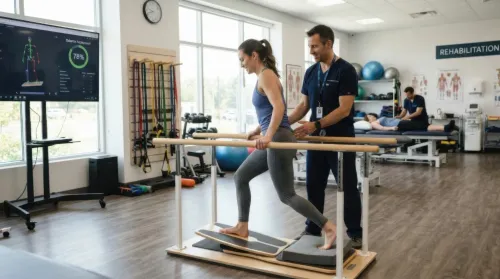
| Function | “Balance is poor” | Timed sit-to-stand, gait observation, single-leg or supported stance, and a documented falls-risk history |
| Women’s health | Kegel exercises only | Leakage, prolapse pressure, pelvic or sexual pain, breathing strategy, abdominal-wall function and pregnancy-related joint or posture changes |
| Bone and symptoms | Standard standing drills | Fracture-aware loading, stable supports and modifications for vertigo, pain or reduced foot and ankle control |
Ask how difficulty will progress, what support you will use, and which symptoms mean you must stop. A safe plan refers unexplained fainting, new neurological symptoms, acute severe vertigo, suspected fracture, chest pain, unusual breathlessness or palpitations before exercise continues.
For women health physiotherapy in vadodara, Physiospace By Dr. Pratiksha is worth asking these documentation and referral questions rather than choosing a programme from its service label alone. A thorough answer matters more than a generic balance handout.
Related services
Neurological Rehabilitation Physiotherapy is a specialized rehabilitation service designed to improve walking ability, body balance, coordination, and mobility in individuals... View service → |
Geriatric Physiotherapy Physiotherapy Balance Training Physiotherapy is a specialized rehabilitation service that helps improve stability, coordination, posture, and body... View service → |
Frequently asked questions
What does women’s health physiotherapy add to balance training?
It assesses pelvic-floor symptoms, pelvic pain, pregnancy-related changes, abdominal-wall function, breathing strategy, scars and bone health alongside balance.
Which women’s health conditions can affect balance and exercise tolerance?
Pregnancy-related musculoskeletal changes, pelvic-organ-prolapse symptoms, urinary or faecal leakage, pelvic pain, sexual pain, post-operative recovery and bone-health concerns can affect training.
How should balance exercises change by life stage?
Exercise selection and progression should reflect pregnancy, postpartum recovery, menopause, bone-health risk, surgery and current symptoms rather than age alone.
How can you practise balance exercises safely at home?
Stand beside a wall or stable chair, begin with supported exercises, keep the floor clear and stop if you develop pain, dizziness, leaking or pelvic pressure.
Keywords