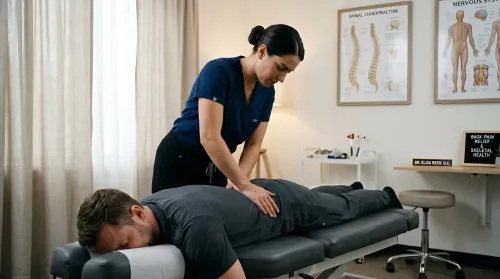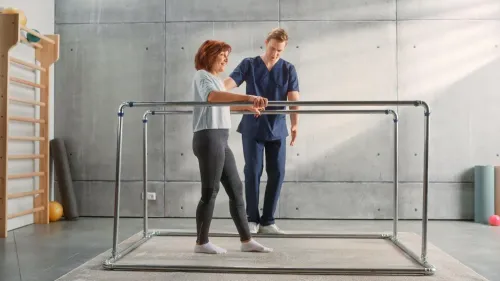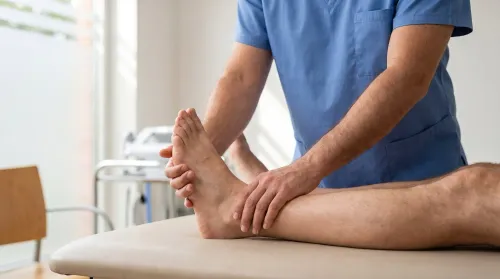
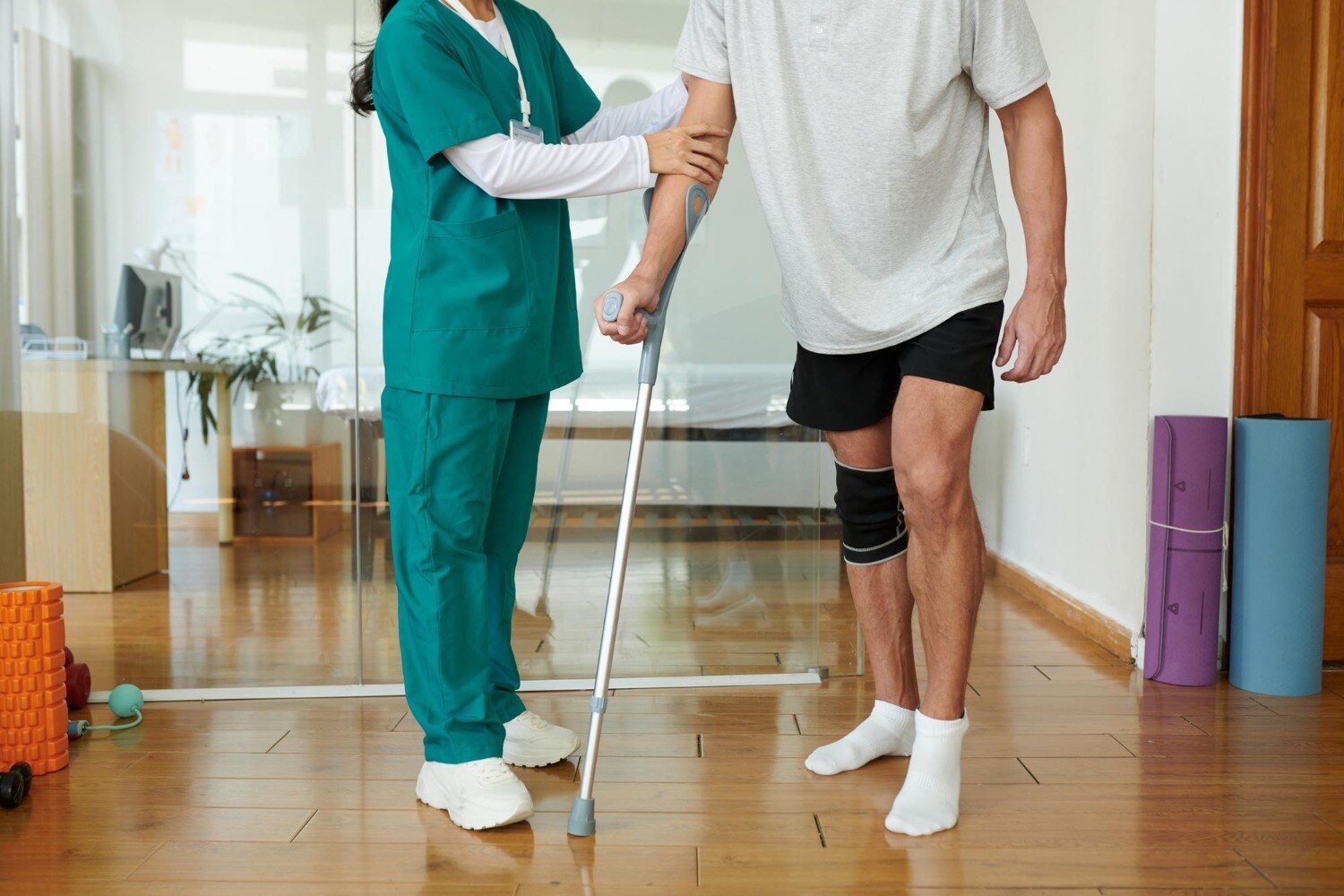
A healed fracture can still leave you limping, avoiding stairs, lifting one shoulder, or relying on a walking aid because the surrounding joints and muscles have not recovered their normal coordination. You will learn how therapists identify the cause, match exercises to bone healing and loading restrictions, measure improvement, and recognise symptoms that require medical review.
Key takeaways
- Assess joints above and below the fracture, not only the healed bone.
- Match weight-bearing and exercises to the fracture site and fixation method.
- Progress from protection to strength, balance, coordination and normal tasks.
- Seek review for increasing pain, swelling, numbness, wound changes or loss of function.
How movement correction identifies the problem after a fracture
A post-fracture movement assessment examines more than the healed area. It compares pain, swelling, skin or scar sensitivity, joint range above and below the fracture, muscle strength, alignment, coordination, balance, endurance, and tasks such as walking, climbing stairs, reaching, gripping, or lifting. Lower-limb assessment may include the hip, knee, ankle, foot, walking-aid technique, and gait.
Report these compensations instead of trying to force a “normal” pattern:
- Limping, reduced stance time, shortened steps, toe-out walking, or leaning onto a walking aid.
- Guarding, holding a joint stiff, avoiding rotation, or using the trunk to create movement.
- Shoulder elevation, wrist or finger overuse, or leaning away from an injured arm during reaching.
- Knee buckling, foot dragging, poor push-off, loss of balance, or repeated weight shifting.
- Reduced use caused by pain, fear of loading, swelling, weakness, restricted motion, or poor coordination.
| Compensation | What to examine | Possible driver to report |
|---|---|---|
| Leaning over the uninjured leg | Hip control and weight transfer | Pain, weakness, or loading fear |
| Foot turned outward | Ankle dorsiflexion and hip rotation | Stiffness or alignment change |
| Trunk movement during reaching | Shoulder, elbow, and wrist range | Guarding or joint restriction |
| Unsteady steps | Balance, strength, and aid use | Weakness or reduced confidence |
Movement correction physiotherapy identifies the cause, then retests the movement. Fracture recovery rehabilitation must follow imaging, fixation or cast precautions, and prescribed loading limits—not pain alone. Home practice should be adjusted when symptoms persistently worsen.
Why the fracture location and fixation method change the plan
Pain is not permission to load a healing bone. The plan follows the fracture’s location, imaging, fixation stability, cast or brace, and the surgeon’s latest movement and weight-bearing instructions.
| Region | Main rehabilitation priority | Effect of fixation or protection |
|---|---|---|
| Wrist | Restore finger, wrist, and forearm motion, grip, and lifting control. | A cast delays wrist loading; plates or screws still require cleared resistance. |
| Elbow | Protect healing while preventing severe stiffness; retrain reaching and rotation. | A brace may limit extension; plates or screws demand careful loading progression. |
| Shoulder | Recover safe elevation, scapular control, and strength without stressing the repair. | A sling restricts active movement; plates or screws need surgeon-approved range. |
| Hip | Rebuild transfers, hip strength, balance, and walking. | Weight bearing after plates, screws, or replacement follows the operation order, not comfort. |
| Pelvis | Progress bed mobility, transfers, gait, and trunk control. | External fixation or unstable injuries can impose strict loading limits. |
| Knee | Restore extension, quadriceps control, bending, and gait symmetry. | A brace may lock motion; plates or screws affect when bending and resistance begin. |
| Ankle | Control swelling, regain dorsiflexion, and retrain balance and walking. | A cast, boot, plate, or screws can keep weight off until healing is confirmed. |
| Foot | Rebuild toe motion, push-off, arch control, and tolerance for standing. | External fixation or complex fixation often postpones normal footwear and loading. |
Assessment also includes joints above and below the injury, because a stiff ankle or weak hip can preserve a limp after the fracture site improves. Ask for the imaging report and loading limits before starting post fracture physiotherapy in vadodara or orthopedic rehabilitation in vadodara.
Clearance for stretching, resistance, and balance work must come from healing evidence and the orthopedic instructions.
The five stages from protection to normal movement
Advance only when the fracture, fixation, and loading instructions permit it. Cast removal alone is not clearance for running, jumping, or heavy resistance.
1. Protection and swelling control: Elevate the limb, use prescribed compression or cold treatment, and move the free fingers or toes. Follow the surgeon’s limits for weight-bearing, lifting, and wound protection.
2. Protected joint motion: Restore movement at the injured joint and the joints above and below it, within the approved range. Forcing a stiff joint can irritate healing tissue and increase swelling.
3. Strength rebuilding: Begin with muscle-setting exercises, then add resistance after medical clearance. Train both the weakened area and its supporting muscles, because weakness elsewhere can maintain a limp or guarded arm movement.
4. Balance and movement retraining: Progress from the walker or crutches to independent walking only when loading and control are safe. Practise transfers, stairs, turning, uneven ground, and balance; upper-limb work can progress from supported reach to grip, lifting, and coordination tasks.
5. Work or sport return: Build endurance and practise the exact demands of your job or sport before returning fully. Increase distance, speed, load, or impact one variable at a time, and step back if pain or swelling remains worse the next day.
Home practice drives fracture recovery rehabilitation; clinic sessions cannot replace correctly dosed repetition. Post fracture rehabilitation for movement correction in Vadodara should be adjusted when exercises cause persistent worsening rather than simply intensified.
How progress is measured and when symptoms need review
Movement correction is working when objective function improves, not only when pain falls. Recheck joint range above and below the fracture, strength, alignment, gait, balance, swelling, and a task such as climbing stairs or reaching. Record distance, repetitions, walking-aid use, and movement quality so progress is visible.
Home practice remains essential; persistent worsening means the programme needs adjustment, not automatic intensification.
| Sign | Improvement pattern | Prompt review needed |
|---|---|---|
| Pain | Settles after exercise and returns to baseline within a reasonable recovery period | Steadily worsening pain, new sharp pain, a new deformity, or loss of previously gained movement |
| Swelling | Gradually reduces with elevation, movement, and prescribed loading | Marked new swelling, tight skin, or swelling that rapidly increases |
| Nerve or circulation | Normal sensation, warm skin, and usual colour | New numbness, tingling, weakness, pale or blue skin, unusual coldness, or severe unrelenting pain |
| Wound | Dry, closed, and progressively less tender | Opening, spreading redness, pus, foul odour, fever, or increasing wound pain |
| Function | Better gait, grip, balance, coordination, or daily-task control | Sudden inability to bear the permitted weight or use the limb |
Seek urgent medical attention for severe pain with rapidly increasing swelling, a cold or discoloured limb, or new loss of movement or sensation. Do not increase stretching, resistance, or weight-bearing beyond the surgeon’s clearance, even if you feel comfortable.
A clinician providing movement correction physiotherapy or post fracture physiotherapy in Vadodara should review any setback against your imaging and loading restrictions.
Choosing post-fracture physiotherapy in Vadodara and practising safely at home
Ask the physiotherapist to state your current precautions, including the surgeon’s weight-bearing or loading limit, cast or fixation restrictions, and whether imaging confirms healing. For post-fracture rehabilitation for movement correction in Vadodara, request measurable starting findings: joint range, strength, swelling, balance, gait, alignment, and function above and below the fracture.
Ask for the home-exercise dose, warning symptoms, and the exact criteria for progression or stopping. Physiospace By Dr. Pratiksha can be one option to compare when assessing orthopedic rehabilitation in Vadodara; judge the plan, not claims about advanced equipment.
Your home programme should match the prescribed stage:
- Practise range, strength, balance, and functional movements at the stated repetitions and frequency.
- Stop and report increasing swelling, sharp pain, new numbness, wound changes, or symptoms that remain worse into the next day.
- Progress only when movement quality, balance, strength, and permitted loading improve; pain relief alone does not prove the bone is ready.
- Reassess the programme if symptoms persistently worsen rather than simply adding repetitions.
Walking aids reduce unsafe loading and compensatory gait; they do not mean rehabilitation has failed.
| Aid | Use | Reduce or change when |
|---|---|---|
| Walker | Maximum stability and controlled loading | Balance and step control meet the therapist’s test |
| Crutches | Unloading while practising a more normal gait | Strength and prescribed weight-bearing allow it |
| Cane | Light support and balance cue | You walk without leaning, limping, or losing alignment |
Related service
Orthopedic Rehabilitation Physiotherapy – Expert Recovery & Mobility Restoration Recover safely and regain your strength with Post-Fracture Rehabilitation Physiotherapy at... View service → |
Frequently asked questions
How does movement correction identify problems after a fracture?
A movement assessment compares pain, swelling, scar sensitivity, joint range, strength, alignment, coordination, balance, endurance and functional tasks such as walking, stair climbing, reaching or gripping.
Why does the fracture location and fixation method change rehabilitation?
The fracture site determines which joints, muscles and weight-bearing tasks need attention, while casts, plates, screws, rods or external fixators determine movement restrictions and loading limits.
What are the five stages of post-fracture rehabilitation?
Recovery progresses from protection and swelling control to restoring movement, rebuilding strength, improving balance and coordination, and returning to normal work, sport or daily activities.
How is progress measured during fracture recovery?
Progress is measured through pain and swelling trends, joint range, strength, walking or task quality, balance, endurance and the amount of assistance or weight-bearing required.
When should post-fracture symptoms be reviewed?
Arrange a clinical review for worsening pain or swelling, new numbness, colour or temperature changes, wound or scar problems, reduced movement, instability or a sudden decline in function.
Keywords