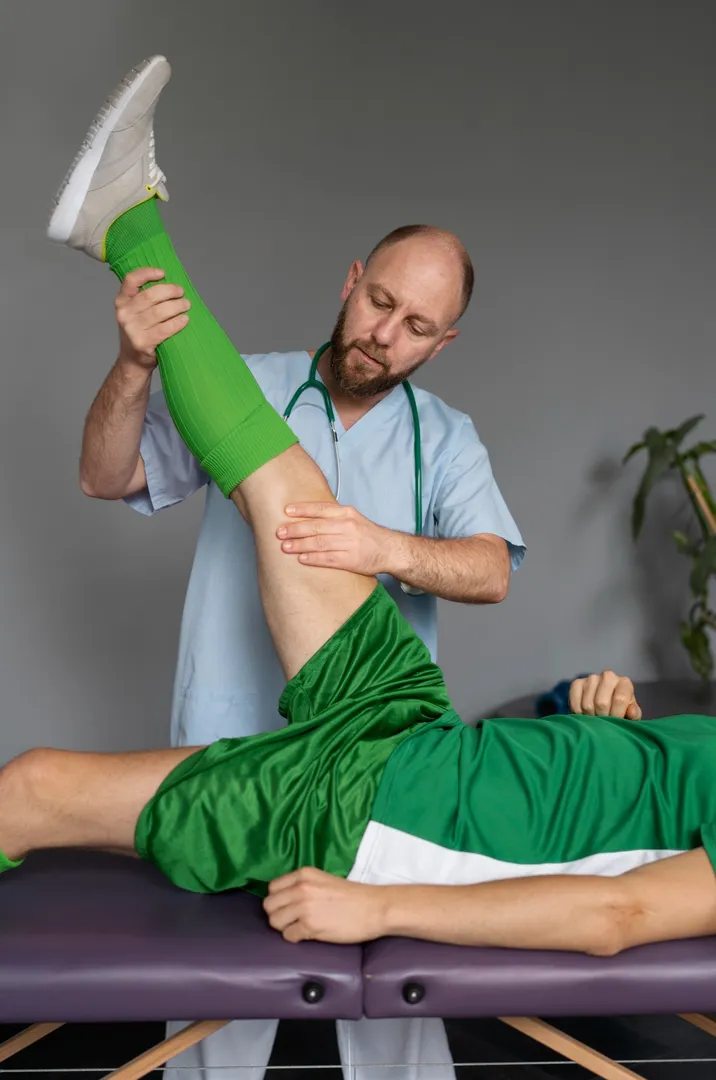
A sports injury can create a difficult question: when is it actually safe to start playing again? Pain settling down is encouraging, but it does not always mean that strength, flexibility, balance, and movement control have returned completely. Sports Injury Rehabilitation focuses on rebuilding these abilities progressively before unrestricted activity resumes.
This approach is relevant not only to competitive athletes. Recreational runners, gym-goers, cyclists, badminton players, footballers, cricketers, and people participating in fitness activities across Vadodara can also experience injuries that require structured rehabilitation.
Common Injuries That May Need Rehabilitation
Sports-related problems frequently involve muscles, ligaments, tendons, and joints. Examples include:
- Ankle sprains
- Muscle strains
- Knee injuries
- Shoulder problems
- Tendon irritation
- Running-related overuse injuries
- Back pain associated with training
- Recurrent injuries during sport
The rehabilitation process should reflect the specific injury as well as the demands of the activity the person wants to resume.
Why Pain Alone Is Not a Return-to-Sport Test
A player may feel comfortable while walking but still experience difficulty during sprinting, jumping, turning, or sudden changes of direction.
That difference matters.
Returning to sport requires more than comfortable everyday movement. Depending on the activity, rehabilitation may need to restore strength, endurance, coordination, balance, agility, and confidence.
A runner may need progressive load and running drills. A badminton player may need lateral movement and landing control. Someone returning to cricket may require sport-specific progression based on whether they bowl, bat, or field.
Rehabilitation Should Progress in Stages
Early rehabilitation may focus on controlling symptoms and restoring comfortable movement. As recovery advances, strengthening and functional exercises become increasingly important.
Later stages may include:
- Progressive resistance exercises
- Balance and coordination work
- Running or jumping progression where appropriate
- Direction-change drills
- Activity-specific movement practice
- Gradual return to training
Skipping directly from basic exercises to full-intensity sport can place recovering tissues under demands they have not yet been prepared to tolerate.
Preventing the Same Problem From Returning
Previous injury can sometimes contribute to future problems when strength deficits or movement issues remain unresolved.
A good rehabilitation programme therefore considers why the injury occurred. Training volume, recovery time, technique, mobility, muscle strength, footwear, playing surface, and previous injuries may all be relevant.
For active people in Vadodara, the goal of sports rehabilitation is not simply to become pain-free. It is to rebuild the physical capacity required for the chosen activity. A gradual, criteria-based return gives the body time to adapt to increasing demands and can make the transition back to sport more controlled.
Keywords