After a stroke, hands-on treatment can ease stiffness, support safe movement, and prepare the body for practice, but it is only one part of recovery. You will learn what manual therapy involves, when it is appropriate, how treatment progresses, and what to ask before choosing a provider in Vadodara.
Key takeaways
- Manual therapy prepares movement; it cannot repair damaged brain tissue.
- Request assessment of strength, balance, sensation, tone, transfers, and walking.
- Never pull the affected arm or lift a stroke survivor by the shoulder.
- Choose a provider offering progressive home, walking, and community training.
What manual therapy means after a stroke
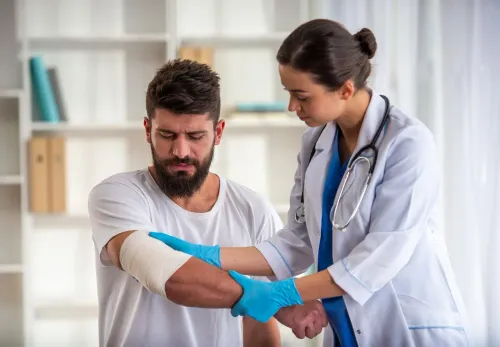
Manual therapy after a stroke is hands-on preparation for movement, not a way to repair damaged brain tissue. In stroke rehabilitation manual therapy in Vadodara, a therapist may guide positioning, assist joint movement, reduce soft-tissue stiffness, stretch safely, or mobilise a joint when indicated.
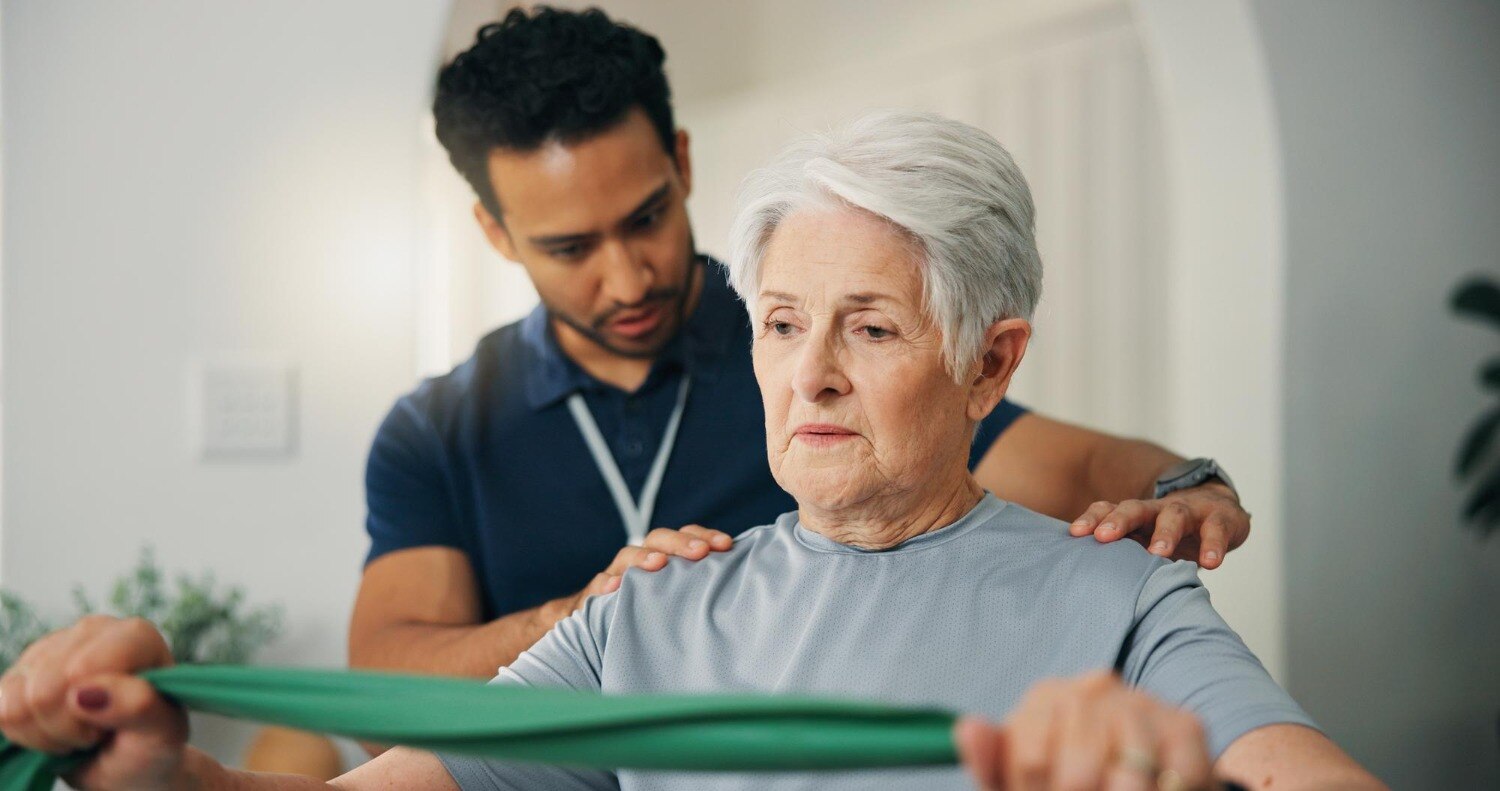
During rolling, sitting, standing, reaching, or walking, the therapist may guide alignment and movement without taking over the task.
It may support:
- Shoulder pain, stiffness, restricted movement, or difficulty opening the hand
- Abnormal muscle tone, soft-tissue tightness, and poor trunk control
- Rolling, bed mobility, transfers, balance, and preparation for walking
- Active movement by making a painful or restricted body part easier to use
A therapist should explain the target, expected benefit, and length of a time-limited trial. Evidence has not shown one massage or mobilisation technique to produce a lasting recovery on its own. It cannot replace repetitive, task-specific practice, strengthening, balance training, gait training, speech therapy, occupational therapy, or medical stroke management.
Active movement provides the practice needed to relearn function; hands-on care only supports that process. A stroke physiotherapy in Vadodara service should therefore combine manual treatment with safe handling, active exercise, and functional practice rather than promise results from massage alone.
How a stroke rehabilitation assessment determines the right option
A thorough first assessment determines whether hands-on care is safe and which problem deserves attention. Record the stroke type and date, affected side, medications, medical precautions, and whether the person is medically stable enough to participate. Rehabilitation can begin once stable and remain useful months or years after the stroke.
- Examine pain, sensation, muscle tone or spasticity, strength, joint range, balance, walking, transfers, arm and hand function, cognition, communication, vision, neglect, fatigue, mood, swallowing, continence, and the home environment.
- Observe how aphasia, depression, cognitive impairment, fatigue, or fear of falling affect participation; adapt instructions, rest periods, communication, and caregiver training instead of assuming poor effort.
A painful or weak shoulder needs a cause-specific plan, not automatic massage or mobilisation.
| Cause | Assessment clue | Treatment implication |
|---|---|---|
| Subluxation | Visible or palpable loss of alignment | Protect and support the arm; never pull it |
| Restricted range | Stiff, limited movement | Gentle, guided mobility before active practice |
| Spasticity | Velocity-dependent resistance or abnormal posture | Manage tone while pursuing a functional goal |
| Soft-tissue injury | Local tenderness or painful arc | Avoid aggravating movement and refer when needed |
| Complex regional pain syndrome | Disproportionate pain, swelling, colour or temperature change | Seek specialist assessment |
| Central post-stroke pain | Burning or altered sensation without local injury | Consider neurological and medical management |
A neurological rehabilitation clinic in Vadodara should set activity goals such as dressing, toileting, household walking, or using the affected hand. Repeat walking speed or distance, sit-to-stand, balance, range of motion, pain, upper-limb activity, and daily independence to judge stroke recovery treatment in Vadodara.
How treatment changes from bed mobility to community walking
Treatment moves from protection and assisted movement to repeated, purposeful practice as strength, control, and safety improve. Early stroke physiotherapy in Vadodara may address positioning, rolling, bed mobility, supported sitting, shoulder protection, and safe caregiver handling before standing or walking begins.
- Early stage: guide rolling, repositioning, sitting balance, and transfers while protecting the affected arm and shoulder.
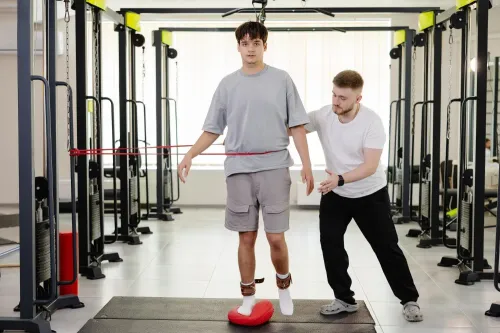
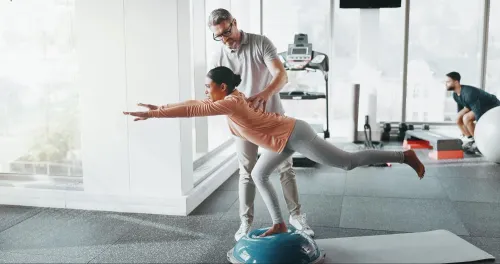
- Progression stage: practise trunk control, reaching, sit-to-stand, transfers, weight shifting toward the weaker side, and standing balance.
- Walking stage: add over-ground walking, turning, stepping over obstacles, and stair practice with the appropriate aid or support.
- Conditioning stage: use treadmill training when suitable, plus strengthening and aerobic exercise to improve walking endurance.
- Home stage: provide a written programme so safe repetition continues between visits.
A typical session might support the affected shoulder without pulling it, guide rolling, practise repeated sit-to-stand, and shift weight toward the weaker side. The therapist then progresses stepping or stairs according to balance, fatigue, cardiovascular status, and fall risk.
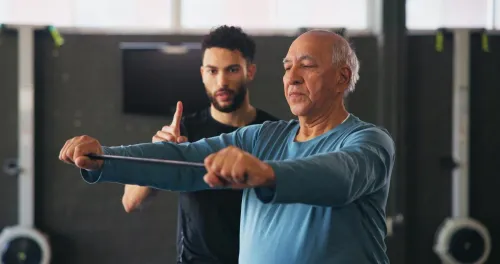
Hands-on preparation can reduce stiffness or improve movement comfort, but recovery depends on repetition, task-specific exercise, active arm and hand practice, gait training, and caregiver practice. For selected people, intensive task practice or constraint-induced movement therapy may be considered when active wrist and finger movement, sensation, cognition, balance, safety, and practice ability are sufficient.
Forcing use of an uncontrolled arm can increase pain, frustration, or compensatory movement.
How to protect the affected shoulder and manage spasticity safely
Never pull the affected arm during a transfer, force it overhead, or use forceful stretching at home. Good stroke rehabilitation manual therapy in Vadodara starts with assessment of pain, alignment, range, muscle tone, and movement control before mobilisation.
| Approach | Safe use | Stop or avoid when |
|---|---|---|
| Therapist-guided mobilisation | Gentle, supported movement within assessed range | Pain increases, alignment is poor, or control is absent |
| Transfer handling | Support the shoulder blade and arm while moving the body | Anyone pulls the hand or upper arm |
| Shoulder elevation | Progress only when the clinician confirms safe control | Routine overhead pulleys are used without assessment |
New pain, swelling, visible shoulder subluxation, or loss of movement needs clinical assessment. These signs can reflect restricted range, spasticity, soft-tissue injury, complex regional pain syndrome, or central post-stroke pain.
High tone alone is not a reason for aggressive stretching. The clinician should check pain, infection, constipation, urinary problems, and poor positioning, then set a functional goal and combine positioning, active movement, task practice, and an orthosis when indicated. Botulinum toxin is a specialist option for selected focal spasticity.
Fatigue, aphasia, depression, cognitive impairment, or fear of falling can change the plan. Use shorter instructions, longer rest periods, adapted communication, and caregiver training rather than forcing participation. Hands-on care should prepare useful movement, not replace active practice.
How to compare stroke rehabilitation providers in Vadodara
Choose a programme, not a temporary feeling of looseness after hands-on treatment. For stroke recovery treatment in Vadodara, compare assessment quality, structured practice, measurable outcomes, and coordination with other services. A neurological rehabilitation clinic in Vadodara, such as Physiospace By Dr. Pratiksha, is worth considering when its assessment and programme match the person’s needs.
| Provider feature | What to ask | Warning sign |
|---|---|---|
| Assessment | Does it measure walking, transfers, balance, arm function, tone, pain, fatigue, cognition, communication, swallowing, mood, vision, and home safety? | Only muscle strength is tested |
| Practice dose | How much task-specific practice happens during and between visits? | Manual treatment is the main activity |
| Coordination | Is there referral or coordination for occupational therapy, speech and language therapy, swallowing, mood, cognition, and medical review? | Other problems are treated as “just weakness” |
| Progress tracking | Which measures are repeated, and when? | Success depends on short-term relief alone |
For stroke physiotherapy in Vadodara, ask for:
- A written home programme with repetitions, precautions, and progression between visits
- Caregiver instruction for transfers, positioning, and fall safety
- Review of walking aids, footwear, and orthoses
- Therapy offered regularly across the week
NICE-based rehabilitation targets up to 3 hours per day on at least 5 days per week for people who can tolerate it. If that amount is not tolerated, therapy should still be provided regularly, at least 5 days per week.
Sudden weakness, facial drooping, speech difficulty, vision loss, severe imbalance, or an abrupt severe headache requires emergency assessment, not a routine appointment.
Frequently asked questions
What does manual therapy mean after a stroke?
It includes hands-on positioning, guided joint movement, safe stretching, soft-tissue work, and selected joint mobilisation to prepare movement.
How does an assessment determine stroke rehabilitation treatment?
The therapist assesses strength, balance, sensation, muscle tone, range of motion, transfers, gait, fatigue, and daily activities before selecting treatment.
How does stroke rehabilitation progress from bed mobility to community walking?
Treatment can progress from rolling and sitting to transfers, standing, indoor walking, stairs, uneven surfaces, outdoor practice, and community tasks.
How can you protect the affected shoulder after a stroke?
Support the arm during transfers and sitting, avoid pulling it, and follow therapist-guided positioning and movement limits.
How should you compare stroke rehabilitation providers in Vadodara?
Check neurological rehabilitation experience, individual assessment, home exercises, measurable goals, caregiver training, safety planning, and progression toward daily activities.
Keywords