After injury-prevention training ends, fitness declines when exercise stops or when every session repeats the same gentle movements. A weekly mix of strength, balance, aerobic activity, mobility and recovery will help you stay active while clear progression rules, warning signs and simple performance checks show when to advance or seek reassessment.
Key takeaways
- Aim for 150 minutes of moderate aerobic activity weekly.
- Strengthen on two days and practise balance on three days.
- Progress only one exercise variable at a time.
- Track walking, standing, balance and daily tasks—not pain alone.
Build a Weekly Fitness Routine That You Can Repeat
Aim for at least 150 minutes of moderate-intensity aerobic activity each week, strength work on two or more days, and balance-focused activity on three or more days. Spread these across the week rather than forcing every component into one session.
That structure helps you maintain fitness after injury prevention training for older adults in vadodara without overloading a recovering joint.
- Monday: 25-minute level-surface walk, followed by sit-to-stands and heel raises.
- Tuesday: Strength training, then five minutes of supported balance practice.
- Wednesday: 30-minute cycling, water exercise, or walking session; use supervised physiotherapy if prescribed.
- Thursday: Mobility exercises and a 25-minute walk.
- Friday: Strength training with controlled step-ups, plus tandem walking beside a stable support.
- Saturday: 45-minute low-impact aerobic session, split into shorter intervals if needed.
- Sunday: Rest, gentle mobility, and a review of fatigue, swelling, and steadiness.
Keep balance work near a counter or sturdy chair when fall risk is present. Outdoor walking also requires level, dry paths, good lighting, suitable footwear, and awareness of traffic.
Repeat the same weekly pattern until you complete it comfortably. Then change one feature only: add five minutes of walking, one or two repetitions, slightly more resistance, or a small balance challenge. Hold the plan when fatigue, swelling, or altered movement persists into the next day.
Use Specific Exercises and Progress One Variable at a Time
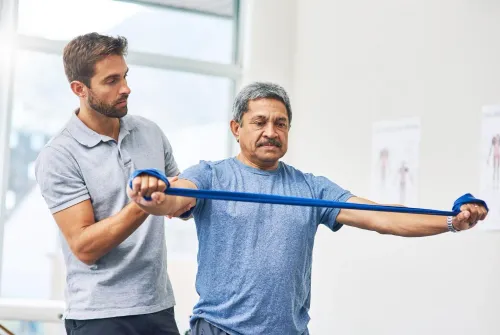
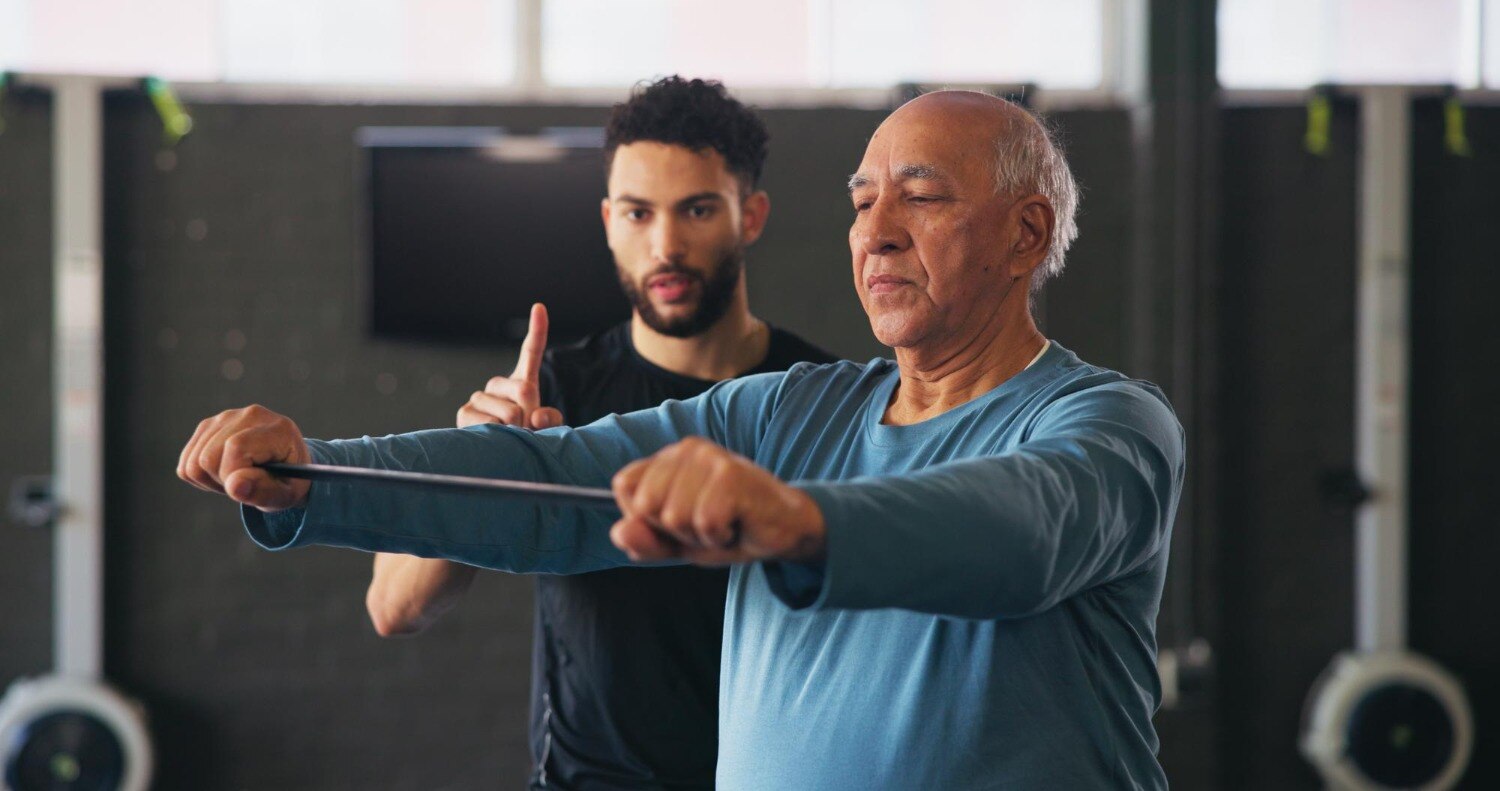
Choose exercises that preserve four abilities: strength, aerobic capacity, balance and joint movement. Senior fitness after rehabilitation in Vadodara can include sit-to-stands, heel raises, step-ups, walking intervals, tandem walking, supported single-leg stands and gentle mobility drills.
Keep resistance training at least twice weekly and spread balance practice across three or more days; walking alone will not maintain leg strength or fall-recovery ability.
| Variable | Begin with | Progress to |
|---|---|---|
| Duration | 10-minute walking interval | Add 5 minutes when recovery remains comfortable |
| Repetitions | 1 set of 8–10 sit-to-stands or heel raises | Add 2 repetitions per set, up to 12–15 |
| Resistance | Body weight or a light band | Add the smallest available weight while technique stays steady |
| Speed | Comfortable walking or controlled step-ups | Walk faster or perform steps more briskly, not both |
| Balance complexity | Supported single-leg stance | Reduce hand support, then narrow the stance |
Change only one row at a time. Hold that level for several sessions before adding another challenge, and return to the previous level if the joint becomes more swollen, walking becomes uneven, or the exercise changes your movement pattern.
A supervised physiotherapy review is sensible after surgery, with osteoporosis, or when dizziness or weakness affects balance. Perform outdoor walking in cooler hours or use a ventilated indoor space during Vadodara’s heat.
Separate Normal Training Effort From Warning Signs
A productive session leaves you working harder without changing how you move. You may feel muscle fatigue, warmer skin, and faster breathing while still speaking in short phrases; mild soreness should settle within 24 hours and should not cause limping.
For older adult injury prevention in Vadodara, perform balance drills beside a stable support until you can transfer weight without grabbing it.
Stop the session and get advice if you notice:
- Sharp, catching, or escalating pain in a joint or at the old injury
- New swelling, bruising, numbness, weakness, or loss of movement
- Limping, repeated loss of balance, or needing furniture to complete a familiar exercise
- Dizziness, unusual breathlessness, chest pressure, palpitations, or faintness
- Headache, nausea, confusion, unusual weakness, or heavy sweating in Vadodara’s heat
Sit or lie down safely after stopping. Chest pressure, fainting, severe breathlessness, or confusion requires urgent medical care rather than a routine appointment.
Do not “push through” symptoms to meet a weekly target. Record which exercise triggered them, when they began, and whether they continued later that day. Contact your physiotherapist or doctor before repeating that movement; ask for a medication, vision, gait, or balance review when dizziness or falls are involved.
Adapt the Plan for Medical Conditions, Equipment and Vadodara’s Heat
Choose exercise by the risk in front of you, not by a standard routine. A previous injury calls for a smaller, comfortable range and low-impact options until strength and control return; forcing the old level can recreate the problem.
- If a chronic condition affects blood pressure, breathing or blood sugar, use a clinician-set intensity and keep prescribed medication and monitoring instructions nearby.
- If balance is poor, practise weight shifts, direction changes or a narrower stance beside a solid support or with supervision. Static stretching alone will not improve balance.
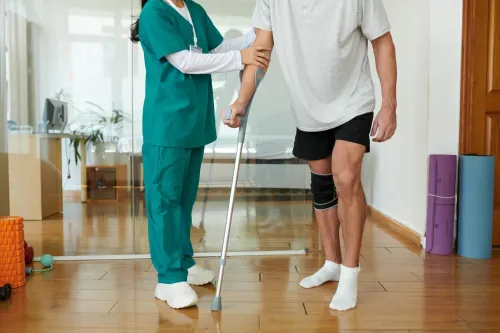
- If equipment is limited, replace weights with controlled sit-to-stands or wall-supported strength work, but do not use unstable chairs, loose stools or furniture that moves.
- If the home is unsafe, clear loose rugs and cables, improve lighting, and avoid walking drills near stairs. Outdoor walking also requires attention to uneven paving, wet surfaces, traffic and secure footwear.
Vadodara’s heat changes when and where you train: choose a cooler part of the day or a well-ventilated indoor room, and drink according to your clinician’s advice. Stop for unusual weakness, headache, nausea, confusion or faintness. Older age, heart disease and medicines that affect sweating or fluid balance increase heat risk.
For older adult injury prevention in Vadodara, ask a clinician or pharmacist to review dizziness-causing medicines rather than stopping them yourself. Senior exercise physiotherapy in Vadodara at Physiospace By Dr. Pratiksha can also reassess the plan after repeated near-falls, new weakness, swelling or declining walking tolerance.
Related services
Geriatric Physiotherapy Physiotherapy in Vadodara Senior Citizen Rehabilitation Physiotherapy At Physiospace By Dr. View service → |
Geriatric Physiotherapy Physiotherapy Services in Vadodara Fall Prevention Physiotherapy – Improve Balance, Strength & Confidence Falls are one of the leading causes of... View service → |
Measure Function Instead of Pain Alone
A stable 30-second sit-to-stand count, walking time, stair control and balance provide better evidence of maintained fitness than pain scores alone. Record the same test every four to six weeks, using the same chair, route and footwear.
For mobility fitness in Vadodara, also note how easily you stand from the floor, carry groceries, bathe, dress and move around the home.
| Measure | How to track | What maintenance looks like |
|---|---|---|
| Walking tolerance | Record continuous minutes and distance | The same route feels manageable without limping or frequent rests |
| Sit-to-stand | Count controlled repetitions in 30 seconds | Similar or improved count without using the arms |
| Stairs | Note steps completed and handrail use | Steady ascent and descent with no knee collapse |
| Balance | Time tandem stance or supported single-leg stance | Stable performance without grabbing or repeated near-falls |
| Daily independence | Track household and self-care tasks | Tasks remain safe without extra help |
Pain relief does not prove restored strength or movement control. Seek reassessment if walking tolerance declines, swelling returns, weakness appears, or dizziness and near-falls increase.
Keep Progress Going With Recovery and Reassessment
To maintain fitness after injury prevention training for older adults in vadodara, keep two lighter recovery days each week and leave at least 24 hours between demanding strength sessions for the same joints. Use the next morning as a checkpoint: if stiffness or swelling is clearly worse, repeat the current level rather than progressing.
Arrange a professional review if you:
- Develop pain that changes your walking or lasts beyond the next day.
- Notice new swelling, weakness, numbness, or repeated loss of balance.
- Stop improving for four weeks despite completing the plan consistently.
A physiotherapist can reassess technique, resistance, footwear, walking surfaces, and whether another condition is limiting progress. Schedule reassessment every four to six weeks while changing exercises, or sooner after a fall, hospital stay, or medication change.
This keeps senior fitness after rehabilitation in vadodara purposeful: you maintain activity without treating a setback as something to push through.
Frequently asked questions
How should older adults build a weekly fitness routine after injury prevention training?
Aim for at least 150 minutes of moderate-intensity aerobic activity weekly, strength exercises on two or more days, and balance-focused activity on three or more days. Spread sessions across the week.
How can older adults progress exercises safely after rehabilitation?
Change one variable at a time, such as repetitions, resistance, duration or balance difficulty. Keep the other variables stable so you can identify what your body tolerates.
Which symptoms indicate a warning sign during exercise?
Stop and seek clinical advice for sharp or worsening pain, new swelling, loss of strength, unusual breathlessness, chest pain, dizziness or a change in walking control.
How can older adults adapt exercise for medical conditions and Vadodara’s heat?
Use exercises and equipment suited to your medical conditions, exercise during cooler hours, drink fluids, choose shaded or air-conditioned spaces, and reduce intensity in high heat.
What should older adults measure besides pain?
Track walking distance, standing time, stair performance, balance, chair rises, sleep and daily activities. Improving function shows whether fitness is returning.
Related services
Sports & Fitness Rehabilitation Physiotherapy are specially designed physiotherapy solutions that help individuals reduce the risk of injuries, improve physical performance, and... View service → |
Geriatric Physiotherapy Physiotherapy in Vadodara Regain your freedom of movement with professional Mobility Improvement Physiotherapy at Physiospace By Dr. Pratiksha. View service → |
Sports & Fitness Rehabilitation Physiotherapy in Vadodara is a specialized rehabilitation and performance enhancement service designed to improve strength, mobility, endurance,... View service → |
Keywords