After a stroke, pain, stiffness, poor shoulder support, increased muscle tone, or limited trunk movement can make active practice harder. You will learn what hands-on treatment can change, how a physiotherapist selects it safely, and how to judge whether it is improving useful movement rather than producing only temporary relaxation.
Key takeaways
- Ask how each hands-on technique supports a specific movement or practice goal.
- Use manual therapy alongside active exercises, not as a replacement for task practice.
- Expect comfort and movement improvements, not a guaranteed return of lost function.
- Choose a clinician who screens sensation, tone, strength, balance and joint safety.
What manual therapy means after a stroke
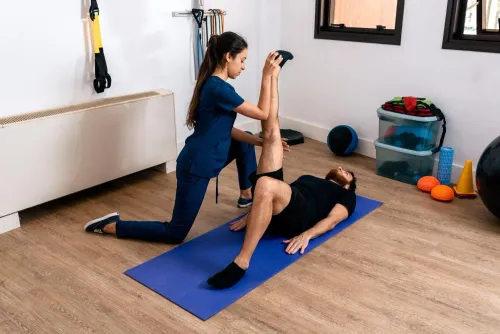
Manual therapy after stroke is a clinician-guided use of hands to improve a specific movement problem, comfort, alignment or ability to practise a task. It is not one standard treatment package. Depending on your examination, it may include positioning, assisted movement, passive range-of-motion work, joint mobilisation, soft-tissue techniques or movement combined with mobilisation.
| Approach | Main purpose | How it differs |
|---|---|---|
| Massage | General relaxation and circulation | It usually aims at comfort; manual therapy links touch to a measured movement or functional problem. |
| Stretching | Lengthening a restricted muscle or joint | It is one technique within treatment, not a complete plan for spasticity or recovery. |
| Joint mobilisation | Graded movement applied to a joint | It targets joint mechanics and must account for pain, alignment and neurological control. |
| Soft-tissue work | Changing muscle, fascia or scar-tissue stiffness | It may support movement, but it does not replace active motor practice. |
| Exercise therapy | Rebuilding strength, control, balance and endurance | It requires your active effort and transfers more directly to reaching, standing, walking and daily tasks. |
| Manual therapy | Preparing the body for useful movement | It combines selected hands-on techniques with guided movement and a functional goal. |
A physiotherapist should explain which technique is proposed and what will be measured afterward. Forceful stretching is unsafe as a default: shoulder pain can reflect subluxation, soft-tissue injury, spasticity or complex regional pain syndrome. Hands-on treatment should support repetitive, goal-directed exercise rather than replace it.
Which post-stroke problems can hands-on treatment address?
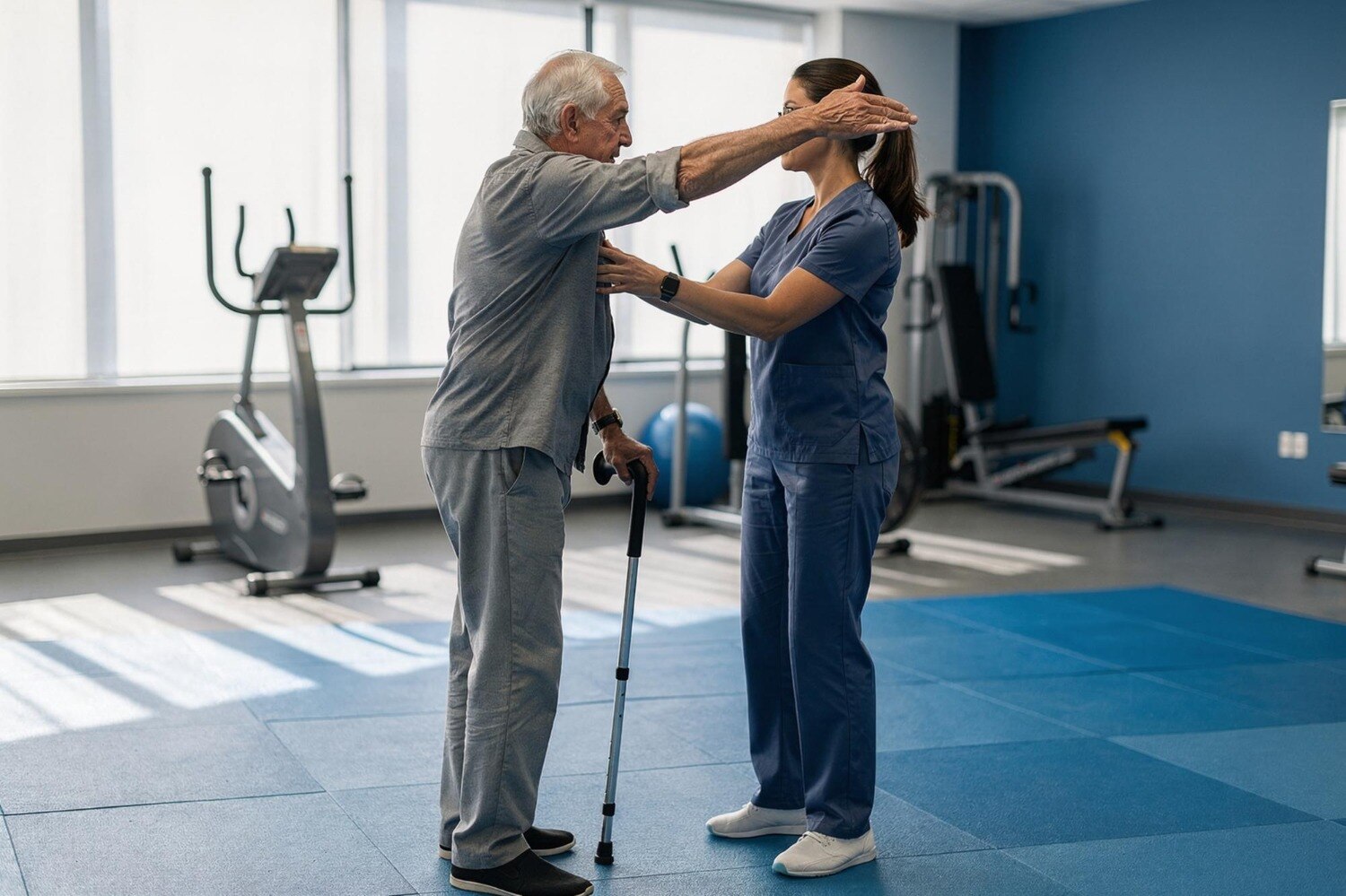
Hands-on treatment is most appropriate when a physical restriction blocks useful movement: shoulder pain, reduced shoulder range, tightness in the hand, soft-tissue stiffness, spasticity-related restriction, poor limb positioning, or limited trunk rotation. It may make reaching, transfers, standing, walking, or self-care easier to practise, but it does not replace active rehabilitation.
| Problem | What the physiotherapist examines | Why it matters |
|---|---|---|
| Shoulder pain or limited reach | Joint range, alignment, strength, sensation, and pain response | Prevents forceful movement in an unstable or injured shoulder |
| Hand tightness | Finger and wrist range, muscle tone, skin condition, swelling, and hygiene needs | Shows whether positioning or gentle movement could improve comfort and care |
| Spasticity-related restriction | Tone during slow and fast movement, voluntary control, and functional impact | Distinguishes a movement barrier from stiffness that needs medical tone management |
| Trunk or limb positioning difficulty | Posture, balance, sensation, and control during sitting or standing | Links handling to transfers, gait, and safer daily movement |
Before treatment, disclose the stroke date, affected side, falls, osteoporosis, fracture or surgery, blood-thinning medication, unusual swelling, shoulder injury, and blood-pressure changes. The examination also considers cognition and your functional goal. Stop routine treatment and seek medical assessment for sudden neurological worsening, severe headache, chest pain, breathlessness, or a hot swollen calf.
Neurological rehabilitation physiotherapy in Vadodara should measure success by movement and task performance, not temporary relaxation alone.
How manual therapy fits into a stroke physiotherapy session
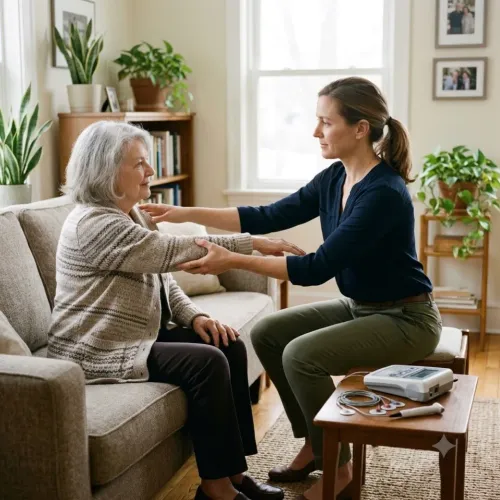
Before hands-on treatment, the physiotherapist checks pain, joint range, muscle tone, sensation, alignment, skin condition, strength and the task you cannot perform easily. They should name the technique—such as positioning, passive movement or joint mobilisation—and the measurable problem it targets. A painful or poorly aligned shoulder needs assessment before stretching.
1. During treatment, the therapist uses gentle handling, positioning or soft-tissue and joint techniques to reduce pain, stiffness or movement restriction. Forceful stretching is unsafe when the cause of shoulder pain is unclear, and passive treatment does not reliably reduce spasticity by itself.
2. The therapist then links the changed movement to active practice. You might reach for a cup, rotate your trunk while sitting, load the affected leg in standing, or practise ankle movement needed for a step.
3. After hands-on work, the session should continue with repetitions, transfers, balance, walking or another functional goal. The therapist may teach a family member how to position the arm safely and prescribe specific home movements.
The value of stroke physiotherapy treatment lies in removing a barrier to practice, not in time spent being treated passively. If manual therapy fills most of the appointment and leaves little time for reaching, standing, walking or daily-task practice, ask what functional gain justifies that trade-off.
What results can you reasonably expect from manual therapy?
Expect modest, targeted changes rather than a cure. Manual therapy after stroke may reduce pain, ease stiffness, improve joint movement, and help align a limb or trunk for active practice. These gains matter when they support reaching, standing, walking, dressing, or hand use. A brief feeling of relaxation is not a rehabilitation outcome.
| Measure | What improvement means | Why it matters |
|---|---|---|
| Passive range of motion | The joint moves farther when the therapist moves it | Tracks stiffness and positioning, not independent ability |
| Active reach or movement | You move the limb farther or with better control | Shows whether movement is becoming usable |
| Walking speed or distance | Faster performance on the 10-Metre Walk Test or greater distance on the 6-Minute Walk Test | Connects treatment to mobility |
| Balance | A higher Berg Balance Scale score or safer transfers | Indicates reduced fall risk during tasks |
| Pain and daily activities | Lower pain scores and easier dressing, bathing, or reaching | Confirms practical benefit |
Passive range does not guarantee better function: a therapist may move your shoulder through a larger arc while weakness, poor coordination, neglect, or pain still prevents you from using it. Manual stretching and positioning alone are not reliable treatment for persistent spasticity.
Your stroke physiotherapy treatment should repeat the same functional tests, pain scores, and activity-specific goals over time, alongside active practice. Progress means doing more safely or independently, not simply feeling looser.
How to choose safe manual therapy for stroke rehabilitation in Vadodara
Before choosing manual therapy for stroke neurological rehabilitation in vadodara, confirm that the clinician has examined your neurological status, muscle tone, joint range, shoulder alignment, sensation, skin, strength, balance, cognition and functional goals. Tell them the stroke date, affected side, falls, shoulder pain, osteoporosis, recent fracture or surgery, blood-thinning medication, unusual swelling and blood-pressure changes.
Stop routine treatment and seek medical assessment for a new severe headache, sudden weakness or speech change, chest pain, breathlessness, a hot swollen calf, or a new painful shoulder injury.
- Ask which technique is proposed: positioning, passive movement, soft-tissue work, joint mobilisation, or movement with mobilisation.
- Ask what measurable problem it targets and how it will support reaching, standing, walking or self-care.
- Ask how much of the session will involve active practice, repetitions and home exercises.
- Check that the physiotherapist explains risks, gains consent, protects a subluxed or painful shoulder, and stops when pain or neurological symptoms worsen.
- Check whether occupational therapy, speech and language therapy, or medical review is needed for hand use, swallowing, communication, tone, mood or medication.
| Choice | What good practice looks like | Warning sign |
|---|---|---|
| Hands-on treatment | Brief preparation followed by active, goal-directed practice | Most of the appointment is passive |
| Provider | Stroke experience, clear assessment and measurable outcomes | Promises to “release” paralysis |
| Progress check | Walking speed, balance, pain or task performance is recorded | Only immediate relaxation is reported |
For stroke rehabilitation in vadodara, Physiospace By Dr. Pratiksha should be judged by these questions and measures, not by the technique’s name alone.
Related service
Neurological Rehabilitation Neurological Rehabilitation Physiotherapy – Expert Care for Neurological Conditions Neurological Rehabilitation Physiotherapy is a specialized... View service → |
Frequently asked questions
What does manual therapy mean after a stroke?
Manual therapy is clinician-guided hands-on treatment, such as positioning, assisted movement, passive range-of-motion work, joint mobilisation or soft-tissue techniques, selected for a specific problem.
Which post-stroke problems can manual therapy address?
It can support problems involving restricted movement, discomfort, positioning, alignment and the ability to practise a task. The appropriate technique depends on your examination findings.
How does manual therapy fit into a stroke physiotherapy session?
A physiotherapist may use hands-on treatment to prepare movement, reduce discomfort or improve alignment, then combine it with active exercise, balance work and task practice.
What results can you reasonably expect from manual therapy after stroke?
You may notice improved comfort, movement or readiness to practise a task. Manual therapy does not guarantee recovery of lost function and works best as part of a broader rehabilitation plan.
How do you choose safe manual therapy for stroke rehabilitation in Vadodara?
Choose a neurological rehabilitation physiotherapist who assesses strength, sensation, muscle tone, balance, joint range and pain before selecting techniques, and who explains the purpose and safety limits of treatment.
Keywords