A stiff shoulder, restricted squat, painful neck, or limited walking stride does not automatically mean you need more stretching. By the end, you will know how a physiotherapist identifies the cause of restricted movement, where manual therapy fits, and how to judge whether treatment is improving real-life function rather than only movement on a treatment table.
Key takeaways
- Flexibility is available range; mobility is controlled range used during tasks.
- A first assessment separates joint stiffness, muscle limitation, pain, weakness, and poor coordination.
- Manual therapy works best when paired with active movement and home exercises.
- Track progress with task-specific measures such as reach, squat depth, walking, or stairs.
Flexibility and mobility are different treatment targets
Flexibility is the passive or assisted range available at a joint; mobility is the usable, controlled movement you can produce during a task. Flexibility asks, “How far can the limb go?” Mobility also asks whether you have the strength, coordination, balance, and control to use that range safely.
| Target | What it measures | Why it matters |
|---|---|---|
| Flexibility | Passive or assisted joint and soft-tissue range | A stiff muscle, capsule, scar, or painful joint may limit how far the limb can be moved |
| Mobility | Active range plus strength, coordination, balance, and task control | You need it to squat, reach, walk, lift, or climb rather than merely move farther on a treatment table |
A restricted movement is not automatically caused by a short muscle. Joint stiffness, swelling, scar tissue, pain-related guarding, nerve sensitivity, weakness, and poor motor control can create the same outward limitation. Stretching the wrong problem can irritate symptoms without improving the activity you care about.
Manual therapy in Vadodara may temporarily make a joint or surrounding tissue easier to move through soft-tissue work, assisted range-of-motion, or graded joint mobilization. That immediate increase does not prove permanent tissue lengthening; changes in pain sensitivity and stretch tolerance can also explain it.
For durable improvement, pair hands-on treatment with active mobility drills, strengthening through the available range, functional practice, and home exercises. The useful result is not simply a therapist moving your limb farther—it is reaching, walking, lifting, or playing with less restriction and better control.
How the first assessment identifies the real restriction
The first assessment identifies whether restricted movement comes from a short muscle or from something else. Before choosing stretching, manual therapy, mobility drills, or strengthening, the physiotherapist compares your symptoms with the movement you need for walking, reaching, lifting, work, or sport.
They document:
- The activity that hurts or feels blocked, including when symptoms begin and what eases them.
- Active range, where you move the limb yourself, and passive range, where the therapist moves it.
- Joint stiffness, muscle-tendon extensibility, swelling, scar tissue, and pain-related guarding.
- Strength, coordination, balance, gait, and control through the available range.
- Sensation, reflexes, weakness, and neural sensitivity when nerve involvement is possible.
- Functional goals and warning signs such as recent trauma, fever, unexplained swelling, or worsening neurological loss.
| Finding | What it suggests | Treatment focus |
|---|---|---|
| Painful active range with near-normal passive range | Guarding, weakness, or poor motor control | Active mobility, strengthening, graded task practice |
| Active and passive range both limited | Joint stiffness, swelling, scar tissue, or tissue restriction | Appropriate manual therapy, assisted movement, then active exercise |
| Pain along a nerve path or altered sensation | Neural mechanosensitivity | Nerve-sensitive assessment and carefully dosed movement |
| Adequate range but poor task performance | Mobility problem, not simply flexibility | Strength, balance, coordination, and functional drills |
A session for mobility physiotherapy in vadodara should reassess whether gains carry into daily activity, not only whether the limb moves farther on the treatment table. Hands-on treatment can create a temporary opening for active practice; it does not replace strengthening or home exercises.
What manual therapy for flexibility involves
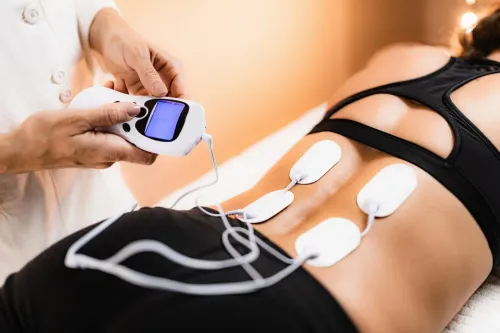
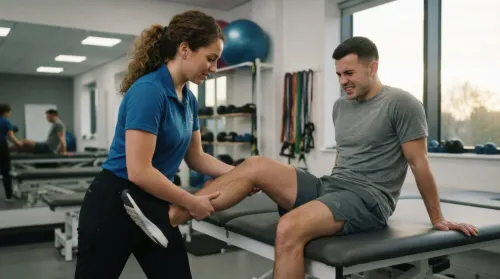
Manual therapy for flexibility uses hands-on techniques to make a restricted movement easier, but it does not replace active training. A physiotherapist may work on muscles and fascia, guide the limb through passive range of motion, or apply a graded joint mobilisation.
The choice depends on whether pain, soft-tissue restriction, joint stiffness, or poor movement control limits the task.
| Technique | What it does | How active training follows |
|---|---|---|
| Soft-tissue work | Applies pressure or movement to muscles and surrounding tissues | Practise the newly available range with controlled mobility drills or strengthening |
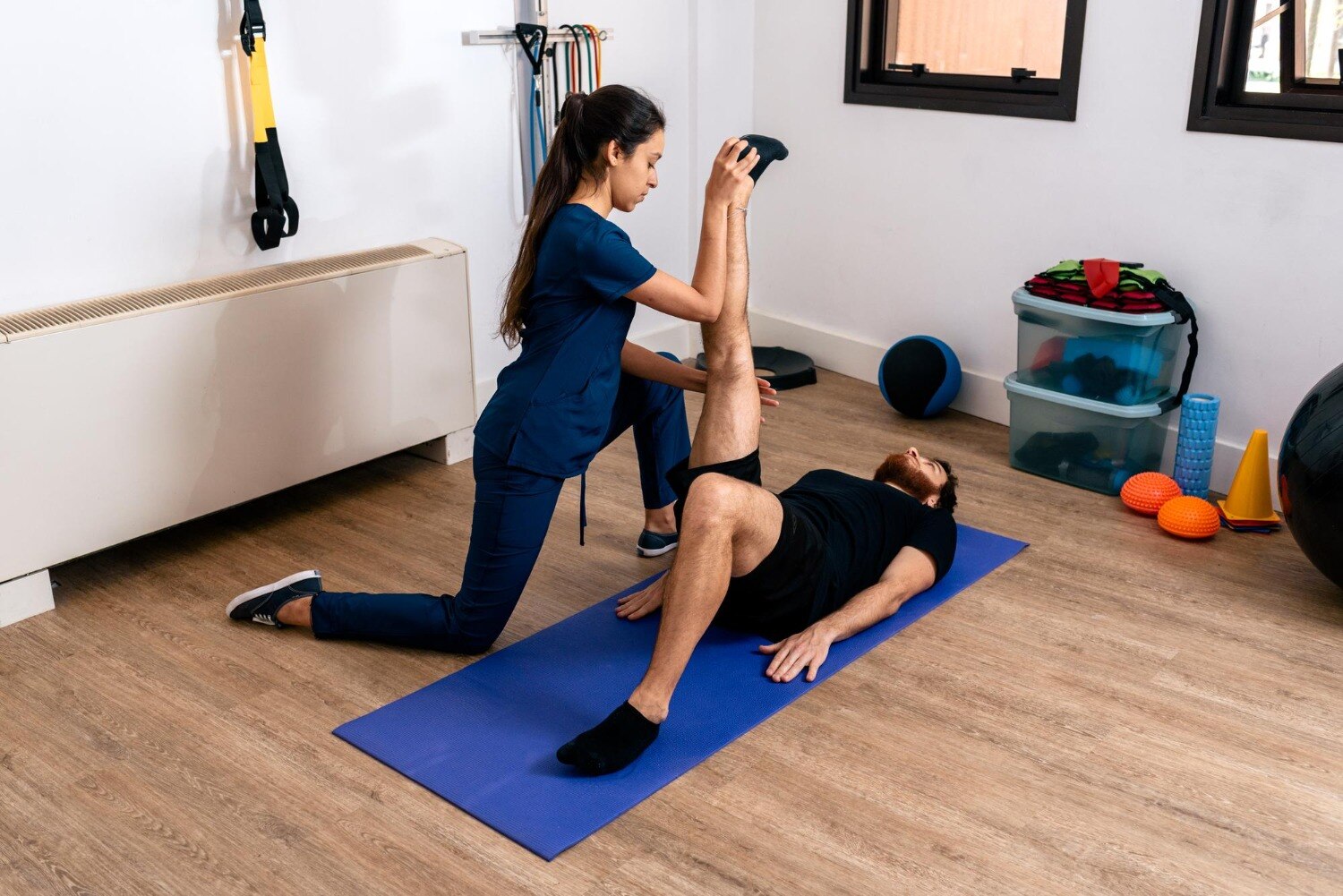
| Passive range of motion | Moves the joint while you relax, showing available movement and tolerance | Repeat the movement actively so your muscles learn to control it |
| Assisted stretching | Uses the therapist’s guidance to reach a comfortable stretch | Perform a prescribed stretch independently at the correct intensity and duration |
| Graded joint mobilisation | Uses small, measured joint movements to address stiffness or improve comfort | Load the joint through the target range with functional movement |
A larger range immediately after treatment does not prove that tissue has been permanently lengthened. Changes in stretch tolerance and pain sensitivity can create short-term gains, so the session must use that window for active practice, strengthening, and task-specific movement.
Forceful stretching or mobilisation can aggravate an irritable joint, healing repair, unstable joint, or fracture. Post-surgical treatment must follow the surgeon’s range-of-motion restrictions; unexplained severe night pain, progressive weakness, saddle numbness, or loss of bowel or bladder control requires medical assessment rather than routine flexibility treatment.
How sessions change for pain, surgery, sport, age, and neurological conditions
Stiff joints need symptom-guided loading, not forceful stretching. The target is the activity restricted by pain or stiffness, such as ankle movement for a squat or shoulder elevation for dressing.
| Condition | Session changes | Useful progress |
|---|---|---|
| Painful or stiff joints | Use graded manual therapy, active mobility, and strengthening within tolerable symptoms; avoid provoking inflammation. | Easier walking, reaching, lifting, or sitting. |
| Post-surgical restrictions | Follow the surgeon’s permitted range and tissue-healing timeline; use gentle assisted movement before progression. | The protected movement returns without swelling or breaching precautions. |
| Athletes | Match mobility to sport demands, then add strength, control, and load tolerance; more range is not automatically better. | Better sport-specific movement, strength, symptoms, and training tolerance. |
| Older adults | Pair stretching with balance, gait, strength, and functional tasks; stretching alone does not prevent falls. | Safer turns, stairs, transfers, and walking. |
| Neurological conditions | Adjust for weakness, altered tone, coordination, sensation, and fatigue; practise controlled, task-specific movement. | Better foot clearance, reaching, transfers, or balance. |
Before treatment, document the painful activity, active and passive range, strength, relevant neurological findings, functional goals, and warning signs. A flexibility training physiotherapy plan should specify the target movement, intensity, duration, frequency, and progression. Reassessment matters during walking, work, sport, lifting, or daily tasks—not only when a therapist moves a limb on the treatment table.
Stop and seek reassessment if forceful mobilisation increases pain, swelling, instability, or neurological symptoms.
How to choose a session and measure useful progress in Vadodara
Ask for a session built around one restricted activity, not a generic list of stretches. If you are arranging mobility physiotherapy in Vadodara, tell the clinic whether the problem affects walking, squatting, reaching, dressing, work, or sport, and ask how progress will be measured.
Ask these questions before booking:
- Will you record active and passive range of motion, strength, pain, and relevant neurological findings?
- What movement is the programme targeting, and what dose will it use: intensity, duration, frequency, and progression?
- How will manual therapy connect with active mobility drills, strengthening, functional practice, and home exercises?
- What symptoms require medical review before treatment?
A request for flexibility mobility manual therapy in Vadodara should include your diagnosis, surgery history, injury date, medicines, and any new weakness or numbness.
| Result | Useful evidence | Weak evidence |
|---|---|---|
| Daily function | You walk farther, reach a shelf, climb stairs, or dress more easily | A limb moves farther only on the treatment table |
| Control | You perform the target movement smoothly with less compensation | Someone else moves the joint farther for you |
| Durability | Improvement remains between sessions and during normal tasks | Range increases briefly, then disappears |
Do not treat new progressive weakness, saddle numbness, bowel or bladder loss, major trauma, unexplained severe night pain, fever, or suspected fracture as routine flexibility work. Whether you choose Physiospace By Dr. Pratiksha or another clinic, request reassessment against your original functional goal.
Stretching alone is not enough for fall prevention; older adults also need strength, balance, gait, and task practice.
Related services
Sports & Fitness Rehabilitation Flexibility & Mobility Training Physiotherapy – Improve Movement, Reduce Stiffness & Enhance Performance Flexibility & Mobility Training Physiotherapy focuses on improving your... View service → |
Geriatric Physiotherapy Physiotherapy in Vadodara Regain your freedom of movement with professional Mobility Improvement Physiotherapy at Physiospace By Dr. Pratiksha. View service → |
Frequently asked questions
What is the difference between flexibility and mobility?
Flexibility is the passive or assisted range available at a joint. Mobility includes the strength, coordination, balance, and control needed to use that range during movement.
How does a physiotherapist identify the real movement restriction?
The assessment compares active and passive range, checks pain response, joint movement, muscle length, strength, balance, coordination, and the task that feels limited.
What does manual therapy for flexibility involve?
Depending on the assessment, it can include hands-on joint mobilisation, soft-tissue techniques, assisted stretching, and guided movement. Active exercises help you retain and control the gained range.
How should you measure progress after mobility physiotherapy?
Use a repeatable task linked to your goal, such as shoulder reach, squat depth, walking distance, stair performance, or turning in bed, alongside pain and movement quality.
Related service
Personalized Exercise Programs Stretching & Strengthening Exercises Physiotherapy – Improve Flexibility, Strength & Mobility At Physiospace By Dr. View service → |
Keywords