Slowness, stiffness, freezing, tremor and unsafe turning do not all respond to the same treatment. By the end, you will know what a Parkinson-specific assessment should test, where manual therapy fits, how active rehabilitation is staged, and what to ask when choosing care in Vadodara.
Key takeaways
- Target short steps, freezing, balance loss, rigidity and difficulty turning.
- Assessment covers walking, transfers, posture, tremor, strength and daily activities.
- Schedule exercises around medication response and the person’s daily demands.
- Use manual therapy to support mobility, not replace active Parkinson’s exercises.
Which Parkinson’s movement problems should rehabilitation target?
Bradykinesia makes everyday movement slow, small and effortful: you take shorter steps, need longer to stand up, button clothing slowly, or struggle to start walking. Rigidity creates stiffness through the neck, trunk or limbs, while tremor may interfere with reaching, writing and holding objects.
| Symptom | What you may notice | Rehabilitation target |
|---|---|---|
| Bradykinesia | Small steps, slow transfers, reduced movement size | Amplitude practice, strengthening and task-specific repetition |
| Rigidity | Stiff posture, reduced trunk rotation or painful joints | Mobility work, posture training and selected hands-on treatment |
| Freezing | Feet feel stuck at doorways, turns or before a step | Visual, rhythmic or verbal cues and gait practice |
| Festination | Steps become quicker and shorter, with the body leaning forward | Step-length training, balance control and stopping practice |
| Reduced arm swing | One or both arms stay close to the body while walking | Reciprocal movement and coordinated gait practice |
| Postural instability | Loss of balance during turning, reaching or recovery from a push | Balance reactions, transfers and fall-prevention training |
These problems interact. A person who walks safely in a quiet room may freeze while turning, talking, carrying a bag or crossing a busy street. Parkinson-specific neurological rehabilitation for parkinsons therefore examines gait, turning, transfers, dual-task movement and falls—not only muscle strength or joint pain.
Manual therapy may ease secondary stiffness or restricted mobility, but it does not reverse bradykinesia, freezing or postural instability; cueing and repeated functional practice remain essential.
What happens during a Parkinson’s rehabilitation assessment?
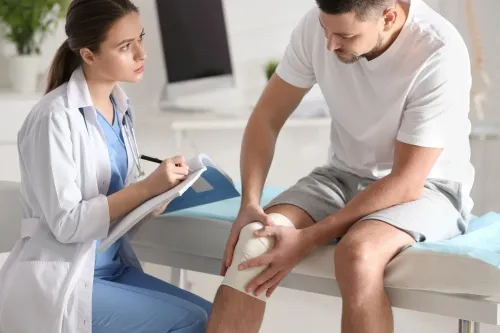
A useful assessment tests the movements that fail at home, not just muscle strength on a treatment table. The therapist watches you rise from a chair, start walking, change speed, turn in a narrow space, stop, and sit down. They note short steps, hesitation or freezing, reduced arm swing, stooped posture and loss of balance.
The assessment usually includes:
- Walking speed, stride length, turning, freezing episodes and the effect of visual or spoken cues.
- Sit-to-stand, bed or chair transfers, stair use and getting up after a near-fall.
- Static balance, balance reactions, strength, joint range, posture and walking endurance.
- Dual-task walking, such as carrying an object while talking, because divided attention can expose fall risk.
- Falls and near-falls, the time and setting of each event, dizziness on standing, vision, footwear and walking-aid use.
- Medication names, doses, timing, wearing-off periods, “on” periods and dyskinesia. Demanding mobility practice is safer during a reliable “on” period.
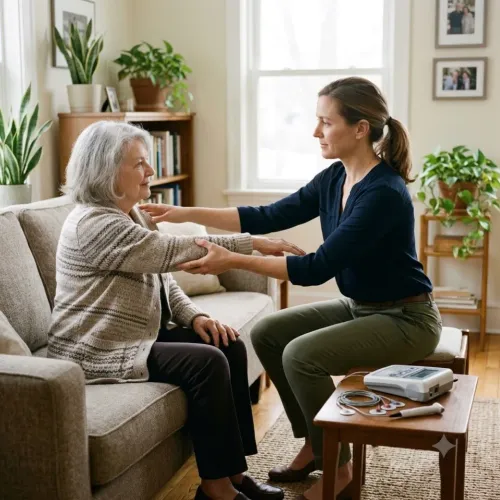
The therapist also asks someone to describe the home: loose rugs, poor lighting, bathroom supports, stair rails, bed height and the route to the toilet. Cognitive changes, fatigue, pain and fear of falling affect independence as much as leg power.
For Parkinson’s physiotherapy in Vadodara, ask how progress will be measured through falls, freezing frequency, gait speed, Timed Up and Go, five-times-sit-to-stand and transfer independence. Sudden worsening, repeated falls or a clear medication-response change needs medical review, not simply more exercise.
How is treatment staged around symptoms, medication and daily demands?
Treatment should match disease severity, medication response and the demands of your day. In early Parkinson disease, sessions can build aerobic capacity, strength, large-amplitude movement and work-specific skills. With greater disability, the priority shifts to safe transfers, walking aids, freezing strategies, caregiver training and preserving essential independence.
Parkinson disease neurological rehabilitation in Vadodara should be scheduled around your most reliable medication “on” period, when demanding gait, balance and task practice are safest and most productive. A session may include brief manual therapy for stiffness, followed by active movement; passive treatment alone will not retrain walking.
- For fatigue, use shorter sessions, planned rest and fewer high-risk tasks rather than pushing until movement deteriorates.
- For cognitive difficulty, give one-step instructions, consistent routines, visual cues and supervision during dual-task or community walking.
- For freezing, practise stopping, weight shifting, rhythmic counting, visual floor targets and turning without rushing.
- For work, rehearse the actual demands: prolonged standing, keyboard use, lifting, stairs, commuting or rapid direction changes.
- For home risk, address loose rugs, poor lighting, low chairs, bathroom transfers, narrow routes and footwear; reassess these after progression.
- After falls, near-falls, faintness, sudden worsening, new severe pain or a changed medication response, seek medical review before adding forceful treatment.
A fall-prevention plan should track turning, transfers, orthostatic symptoms, vision, walking-aid use and medication effects—not just strength or pain. Coordinate changes with the neurologist and occupational, speech or swallowing therapist when cognition, swallowing or daily safety changes.
Where does manual therapy fit in Parkinson’s movement rehabilitation?
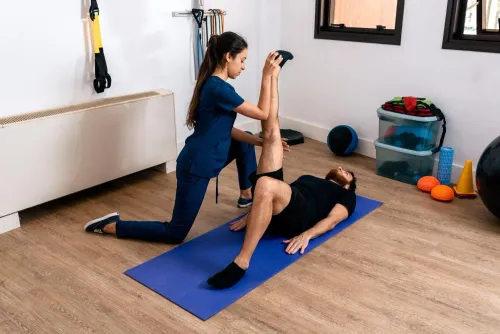
Manual therapy fits as a brief preparation for active Parkinson’s rehabilitation, not as the treatment itself. Manual therapy for Parkinson’s movement may address stiff shoulder, hip, knee, ankle or spinal joints, along with tight pectoral, neck, back, hip-flexor, calf and hamstring tissues.
The immediate aim is practical: reduce pain, ease soft-tissue restriction, improve available joint movement and make upright posture, stepping or trunk rotation easier for the next exercise. It cannot reverse neurodegeneration or independently correct bradykinesia, freezing, tremor or postural instability.
| Approach | Short-term role | What must follow |
|---|---|---|
| Manual therapy | Eases pain, stiffness or restricted movement | Reaching, trunk rotation or sit-to-stand practice |
| External cueing | Improves movement initiation, size or rhythm | Repeated gait and turning practice |
| Balance training | Challenges stepping reactions and stability | Safer transfers and walking tasks |
| Aerobic exercise | Builds physical capacity and reduces deconditioning | Regular progression matched to fatigue |
| Home work | Reinforces movement between appointments | Daily practice linked to real routines |
A passive session without repetition does little for the motor-learning demands of Parkinson’s disease. After hands-on work, practise the specific task while the movement feels easier: use floor markings, rhythmic sound or verbal cues for walking, then add turning, transfers, balance challenges and aerobic exercise.
Your home programme should repeat those skills safely, because gains that stay inside the clinic will not protect daily independence.
How can you judge a Parkinson rehabilitation clinic in Vadodara?
Choose a clinic that can show how it finds Parkinson-specific risks, not one that offers only massage or general strengthening. Ask Physiospace By Dr. Pratiksha whether the treating physiotherapist has neurological experience and regularly manages freezing, falls, medication fluctuations and dyskinesia.
Ask these questions before starting:
- How will you assess freezing of gait, turning, transfers, dual-task walking, balance reactions, near-falls and previous falls?
- Will you check footwear, walking-aid use, vision, home hazards, orthostatic symptoms and medication effects rather than treating strength alone?
- Which outcomes will you record, such as Timed Up and Go, five-times-sit-to-stand, gait speed, walking tolerance, freezing frequency, falls, near-falls and transfer independence?
- How often will you repeat those measures, and what change would lead you to alter the programme?
- How will you progress home exercises from safe practice to turning, obstacle negotiation, aerobic work and daily tasks?
- Will demanding mobility work be timed for reliable “on” periods, and what will you do if sudden worsening or repeated falls occur?
- How will you communicate with my neurologist, occupational therapist, speech and swallowing therapist or physician when symptoms require another specialist?
A suitable parkinsons physiotherapy in vadodara service should explain safety limits, supervision and emergency advice in plain language. It should also give you written home instructions and review whether exercises remain safe as cognition, fatigue, balance or medication response changes. A generic knee or back assessment is not enough for Parkinson disease.
Related service
Neurological Rehabilitation Physiotherapy Treatment in Vadodara | Specialized Rehabilitation for Parkinson’s Patients Parkinson’s Disease Physiotherapy is a specialized... View service → |
Frequently asked questions
Which Parkinson’s movement problems should rehabilitation target?
Rehabilitation should address bradykinesia, short steps, freezing, difficulty turning, balance loss, rigidity, posture, transfers and reduced hand function.
What happens during a Parkinson’s rehabilitation assessment?
A physiotherapist reviews symptoms, medication timing, falls, walking, turning, transfers, posture, range of motion, strength and daily activities.
How is treatment staged around symptoms, medication and daily demands?
Treatment is planned around the person’s best and worst medication periods, symptom severity, fall risk, home routine and specific tasks such as walking or dressing.
Where does manual therapy fit in Parkinson’s movement rehabilitation?
Manual therapy can address stiffness and restricted movement in areas such as the neck, trunk and limbs, while active exercise develops balance, walking and motor control.
How can you judge a Parkinson rehabilitation clinic in Vadodara?
Ask whether the clinic performs an individual assessment, coordinates exercise with medication timing, tracks functional goals and teaches a safe home programme.
Keywords