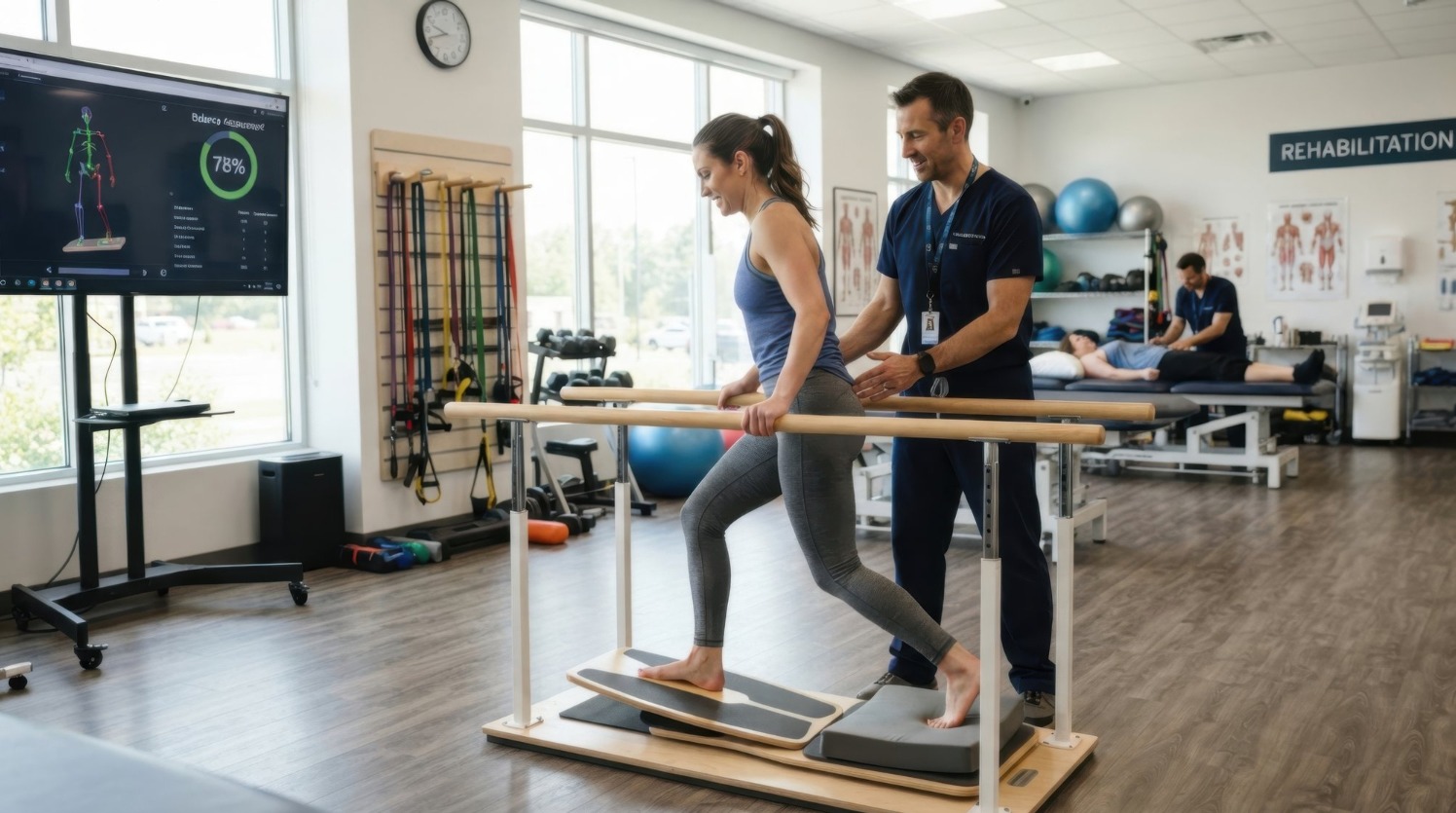
Walking is a complex activity involving strength, coordination, balance, vision, sensation, joint movement, and nervous system control. When one or more of these components changes, a person may start walking more slowly, holding furniture, avoiding uneven surfaces, or feeling uncertain while turning. Balance & Gait Training is designed to identify these difficulties and improve mobility through structured practice.
For older adults and people recovering from neurological, orthopaedic, or prolonged medical conditions in Vadodara, changes in walking confidence deserve attention before they lead to unnecessary activity restriction.
Signs That Walking Should Be Assessed
Consider a physiotherapy assessment when someone begins to experience:
- Frequent stumbling
- Difficulty turning
- Unsteadiness while standing
- Reduced step length
- Dependence on furniture for support
- Difficulty walking outdoors
- Problems negotiating stairs
- Fear of falling
- Reduced confidence after a previous fall
Sudden changes in walking or balance, particularly when accompanied by new neurological symptoms, require appropriate medical attention.
What Does a Gait Assessment Look At?
Walking speed alone does not explain why mobility has changed.
A physiotherapist may observe standing balance, leg strength, joint mobility, step pattern, turning, coordination, and the ability to respond to different movement challenges.
The assessment can also consider whether an existing walking aid is being used correctly.
Training Should Match Real-Life Demands
Someone who walks comfortably on a flat indoor floor may still struggle outside.
Real-world mobility involves doorways, uneven surfaces, obstacles, changes of direction, different walking speeds, and sometimes stairs.
Rehabilitation can progress toward these demands when appropriate.
Exercises may include controlled weight shifting, stepping practice, lower-limb strengthening, balance challenges, walking drills, and functional activities.
At Physiospace By Dr. Pratiksha, balance and gait rehabilitation in Vadodara can be individualised according to the person's mobility level and underlying condition.
Home Safety Is Part of the Discussion
When balance is reduced, the environment also matters.
Loose rugs, poor lighting, cluttered pathways, slippery bathroom surfaces, and unsuitable footwear can increase difficulty around the home.
Families can observe where the person hesitates or regularly looks for support. These everyday observations can provide useful information during assessment.
The objective of gait training is not simply to make someone walk farther during a therapy session. It is to improve the physical abilities and strategies needed for safer, more confident everyday mobility.
For people who have gradually reduced walking because of instability, an individual assessment can help determine which components of balance and gait require attention and how rehabilitation should progress.
Keywords