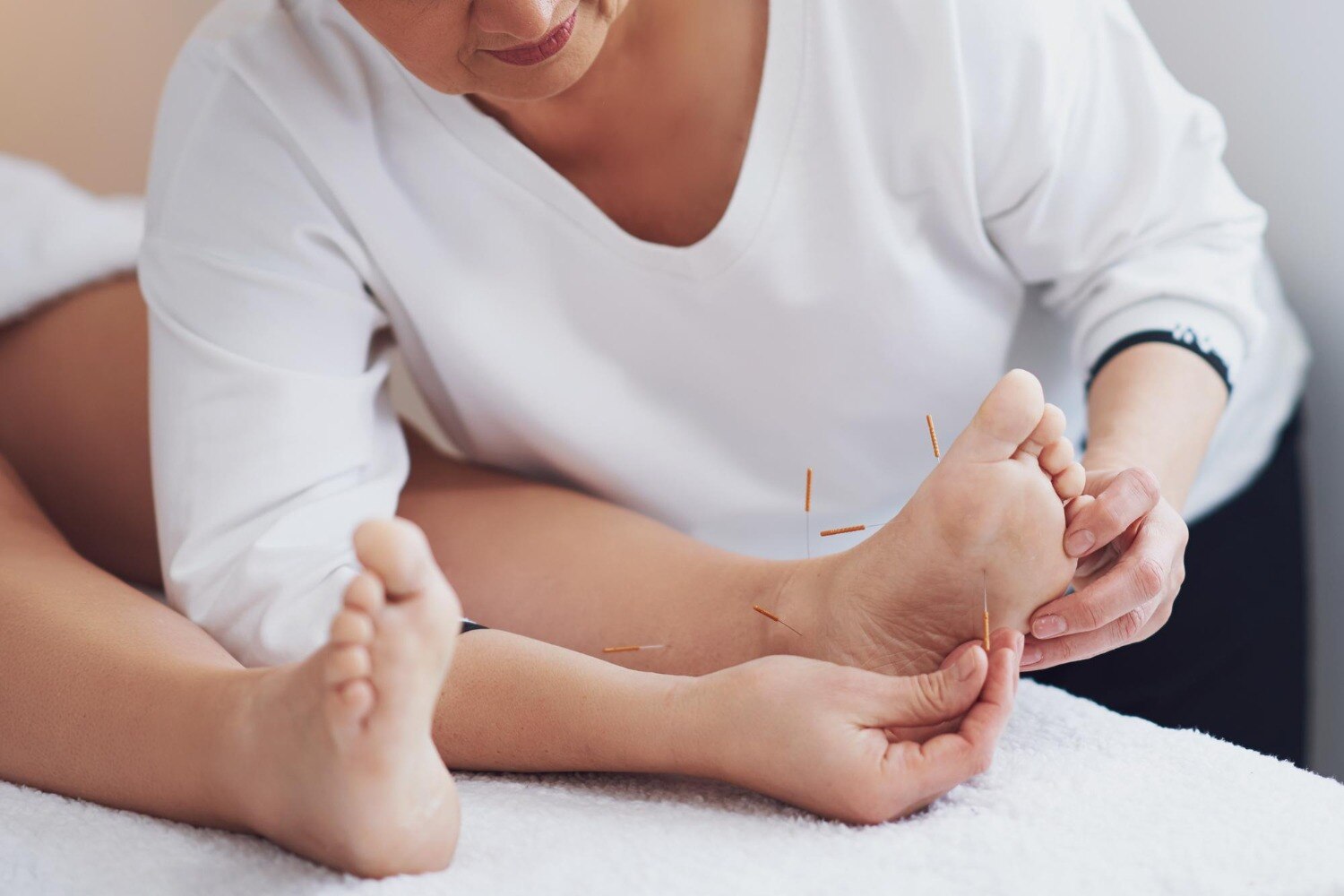
Needle therapy may target problems such as pain or muscle overactivity after stroke, but the evidence does not establish it as a reliable way to restore function or speed brain recovery. You will be able to distinguish acupuncture from dry needling, identify safety concerns, and judge whether a proposed treatment supports—not replaces—active rehabilitation.
Key takeaways
- Ask which procedure is proposed: acupuncture, dry needling or electroacupuncture.
- Postpone treatment for uncontrolled bleeding risk, infection or unstable medical conditions.
- Use needles only alongside an assessed, goal-based stroke rehabilitation programme.
- Track measurable changes in movement, pain, spasticity or function before continuing.
What does “needle therapy” mean after a stroke?
“Needle therapy” after a stroke describes several different procedures, not one standard treatment. Acupuncture inserts fine needles at acupuncture points. Dry needling targets muscles, trigger points or other musculoskeletal tissues. Electroacupuncture adds electrical stimulation through inserted needles.
| Method | What it involves | Possible target |
|---|---|---|
| Acupuncture | Needles at acupuncture points | Pain, sensation or other symptoms |
| Dry needling | Needles in muscles or trigger points | Muscle tightness, pain or restricted movement |
| Electroacupuncture | Electrical current through inserted needles | A symptom selected by the practitioner |
Ask which method is proposed and which stroke-related problem it targets. A plan for needle therapy stroke recovery should name the target symptom, expected timeframe, risks, number of sessions, outcome measures and the point at which treatment stops if function does not improve.
A Cochrane review of 31 studies involving 2,257 participants judged the evidence too low quality to establish improvements in dependence, neurological impairment or quality of life. Different needle protocols, schedules and outcome measures also make the findings difficult to compare.
A change in pain, muscle tightness or a clinical score is not the same as safer walking, independent transfers or better hand use. Trial findings do not prove that needling restores damaged brain tissue or predicts faster recovery. Claims about needle therapy stroke recovery should therefore distinguish short-term symptom relief from meaningful functional recovery.
Which post-stroke problems might needles target?
Shoulder pain, muscle tightness or spasticity are the most plausible reasons to discuss needling after stroke. Acupuncture evidence concerns acupuncture; dry-needling evidence for muscle overactivity comes from a different, smaller evidence base and does not establish complete spasticity control.
| Problem | What needling might target | Functional test |
|---|---|---|
| Shoulder pain | Pain or local muscle sensitivity | Easier reaching, dressing or transfers |
| Muscle tightness | Trigger points or overactive muscles | Better joint movement during a task |
| Spasticity | Short-term tone or discomfort | Safer standing, walking or hand opening |
| Altered sensation | A sensory symptom, not damaged nerve recovery | Improved awareness and limb protection |
| Balance impairment | Pain or stiffness that limits practice | Fewer losses of balance during defined tasks |
| Gait difficulty | Muscle overactivity affecting steps | Safer speed, foot clearance or distance |
| Hand-function limits | Tightness or pain restricting movement | Better grasp, release, eating or dressing |
A short-term change in pain or muscle tone is not the same as safer walking, transfers, dressing or hand use. NICE does not recommend acupuncture as a treatment for post-stroke spasticity.
For someone considering needle therapy for stroke rehabilitation in vadodara, it should remain an adjunct to stroke physiotherapy in vadodara: task-specific practice, progressive strengthening, gait and balance training, occupational therapy, speech therapy when needed, and home exercises.
Set measurable goals such as walking distance, transfer assistance, hand-opening time or dressing steps. Review those measures rather than committing to a fixed number of sessions. Stop or change the plan if symptoms improve without meaningful functional progress.
Who should avoid or postpone needle therapy?
Before booking, obtain medical clearance for needle therapy, especially within neurological rehabilitation after stroke in Vadodara. The practitioner must review your stroke type and timing, the body region to be treated, cognition, communication, sensation, skin condition, bleeding history and current medicines.
1. Ask whether treatment should wait if you take an anticoagulant such as warfarin, apixaban or rivaroxaban, an antiplatelet drug such as aspirin or clopidogrel, or have a low platelet count or bleeding disorder. Never stop medication to permit needling without advice from the prescribing clinician.
2. Postpone treatment for an active infection, unhealed wound, poor skin integrity, uncontrolled seizures or medical instability. Severe sensory loss, neglect, impaired body awareness, severe needle anxiety or inability to remain still also requires postponement, modification or another approach; numb limbs can suffer pressure, burns or needle injury without warning.
3. Confirm that consent is understood and communicated. If cognition, language, sensation or body awareness is impaired, coordinate the decision with the neurologist, physician, physiotherapist and, where needed, a legally authorised decision-maker.
4. Require sterile, single-use needles and a practitioner trained in anatomy and infection control. Ask how bleeding, bruising, dizziness and injury will be handled; rare but serious complications include infection and pneumothorax. New neurological symptoms require emergency care, not needling.
What should a responsible treatment session include?
A safe session starts with an assessment, not a needle. Ask the provider to review your stroke history, sensation, skin, medications, communication and ability to consent, then name one target problem—such as shoulder pain or hand tightness.
For needle therapy for stroke rehabilitation in vadodara, ask which method is proposed and why it fits that problem.
- What will the needles target, and where will each needle be placed?
- How many needles will be inserted, and how long will they remain?
- Will electrical stimulation be used? If yes, what setting and purpose?
- How will the provider protect a numb or neglected limb from burns, pressure, skin injury or unnoticed pain?
- What is the plan for bruising, bleeding, dizziness, infection or a suspected deeper injury?
- How will your symptoms be checked during treatment, and what should you do if pain, weakness or dizziness increases?
- What aftercare applies, including skin checks, activity limits and warning signs?
Require a timeframe, such as a review after a defined number of sessions, and named measures such as pain, walking distance, sit-to-stand performance, hand use or dressing ability. Agree on a stopping point if those functions do not improve.
An individualized assessment and progressive exercise plan can be reviewed with a Vadodara provider such as Physiospace By Dr. Pratiksha. Keep needling subordinate to task practice, strengthening, balance work and other stroke rehabilitation; symptom relief alone is not needle therapy stroke recovery.
How should you decide whether needle therapy belongs in your rehabilitation plan?
Needle therapy can be considered as an adjunct for one carefully selected symptom, such as pain or muscle tightness, but current evidence does not justify presenting it as a standalone stroke recovery treatment. Do not choose it instead of active rehabilitation or because a fixed number of sessions promises predictable recovery.
For neurological rehabilitation after stroke in Vadodara, compare any proposed plan against this checklist:
- Individualized goals linked to activities you need to regain, such as walking, transfers, dressing or hand use.
- Repeated, meaningful practice of those tasks rather than passive treatment alone.
- Progressive strengthening adjusted to your ability and fatigue.
- Gait and balance assessment, training and fall-risk management.
- Regular assessment of arm and hand function, including reach, grasp and release.
- Communication and cognition support when speech, understanding, memory or attention is affected.
- Coordination with occupational therapy or speech therapy when those services are needed.
A suitable stroke physiotherapy in Vadodara plan should measure function, review progress and change intensity according to stroke severity, medical stability, fatigue, cognition, language, pain and spasticity. Recovery is uneven and can continue long term, so a slow phase does not automatically mean treatment has failed.
Seek emergency care for sudden facial weakness, arm weakness, speech difficulty, severe headache, sudden loss of balance or any new neurological change. Do not book a needle therapy appointment for these symptoms.
Frequently asked questions
What does “needle therapy” mean after a stroke?
It can mean acupuncture, dry needling or electroacupuncture. These procedures use different targets, techniques and treatment goals, so ask the clinician to name the exact method.
Which post-stroke problems might needles target?
A clinician might consider needles for muscle pain, tightness, trigger points or selected movement problems. Needle therapy does not replace task practice, strengthening, balance training or other stroke rehabilitation.
Who should avoid or postpone needle therapy after a stroke?
Postpone it when you have an active infection at the insertion site, uncontrolled bleeding risk, unstable medical illness or another condition that makes the procedure unsafe. Tell the clinician about anticoagulants, implanted electrical devices and reduced sensation.
What should a responsible needle therapy session include?
It should include a medical history, medication review, neurological and movement assessment, informed consent, sterile single-use needles, clear treatment goals and monitoring for bleeding, dizziness, pain or skin irritation.
How should you decide whether needle therapy belongs in your rehabilitation plan?
Choose it only when the proposed method addresses a defined problem, the clinician explains its limits and risks, and progress is measured against functional goals within your broader stroke physiotherapy programme.
Keywords