Pain relief from electrical stimulation is not the same as tissue healing, restored strength, or a stable fracture. By comparing IFT with hands-on treatment, exercise, and other options, you can decide what to ask a physiotherapist, what precautions matter, and whether a quoted treatment plan offers meaningful rehabilitation rather than electrodes alone.
Key takeaways
- IFT is usually used alongside exercise and hands-on treatment, not as a standalone recovery plan.
- Manual therapy after a fracture requires confirmed healing and clearance for the specific movement.
- Stop treatment and report worsening pain, numbness, skin irritation, or unusual symptoms.
- Compare Vadodara clinics by assessment, session length, therapist expertise, and included aftercare.
How IFT works and what happens during a session
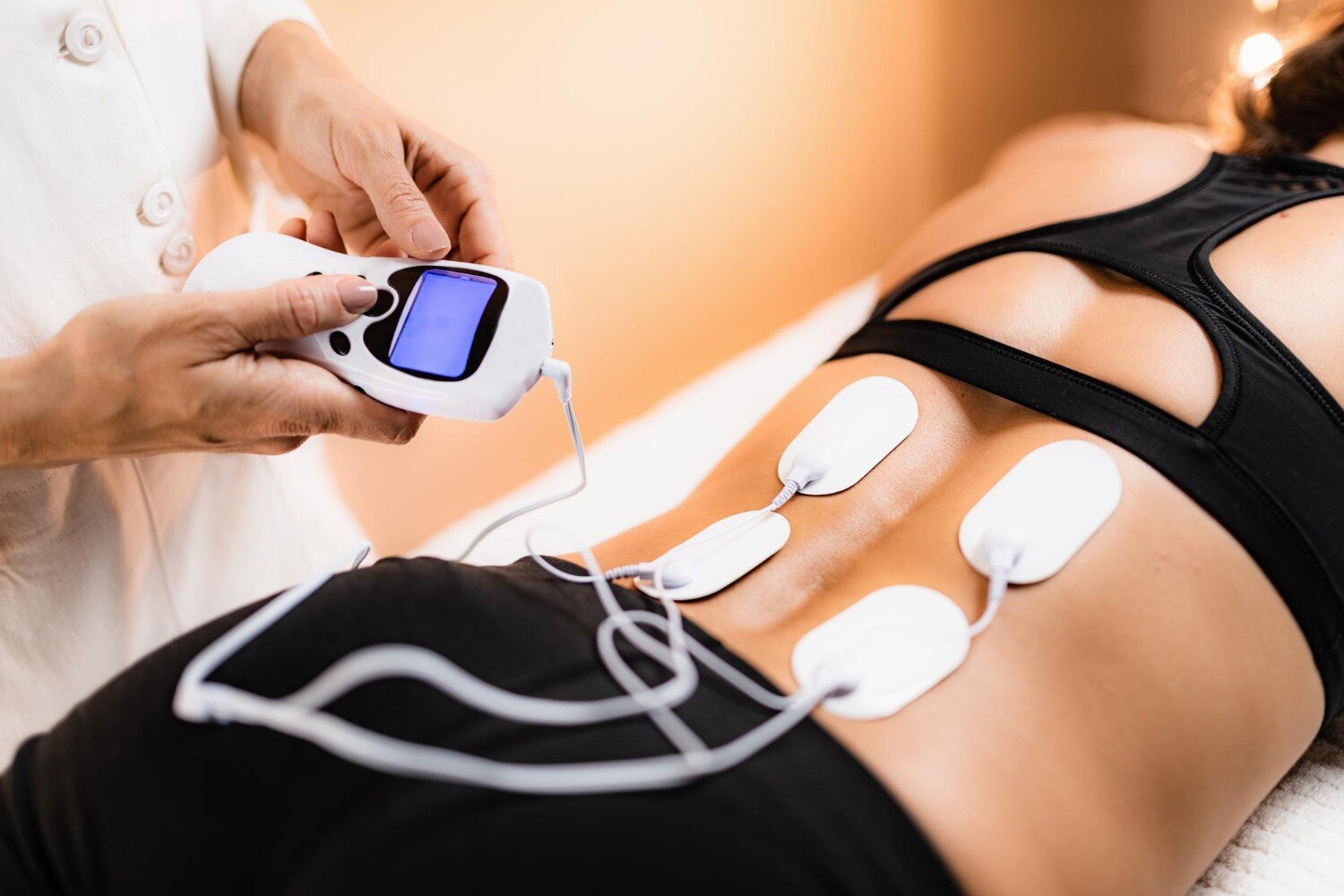
IFT uses two medium-frequency electrical currents that cross in the tissues; their interaction creates a lower-frequency “beat” effect intended to modulate pain and improve comfort around a treatment area. The therapist places paired surface electrodes around, or on opposite sides of, the area after checking your skin and sensation.
You should feel a clear tingling, pulsing, or rhythmic sensation as the intensity rises. It should not hurt, sting sharply, or burn; stronger is not automatically better. Tell the therapist immediately if the sensation becomes painful, unusually hot, or changes suddenly.
A session commonly follows this sequence:
- The physiotherapist asks about your symptoms, movement limits, diagnosis, injury or surgery stage, and goals.
- They inspect the skin, position the electrodes, select settings, and increase intensity while you describe what you feel.
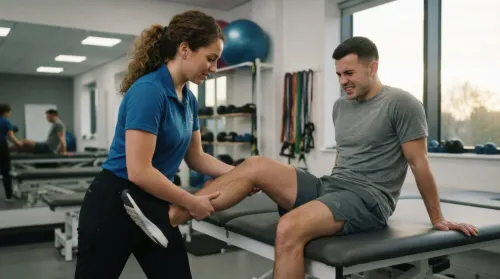
- They reassess movement and symptoms, then may use joint mobilisation, soft-tissue work, scar or swelling techniques, or guided range-of-motion exercises.
- They finish with active movement or strengthening matched to your recovery plan.
IFT suits a problem only when short-term symptom relief could help you move or tolerate rehabilitation. The therapist reviews pain during activity, range of motion, swelling, sleep, sensation, and exercise performance rather than prescribing it automatically.
In searches for electrotherapy IFT for manual therapy in Vadodara, remember that IFT is an adjunct, not manual therapy itself.
Why IFT is usually an adjunct to manual therapy and exercise
IFT can make movement easier by reducing pain or muscle guarding for a short period, but it does not restore joint strength, repair a fracture, or knit a torn ligament. That is why electrotherapy for injury recovery in Vadodara is usually paired with treatment that changes function, not used as the entire plan.
A session may combine care in this order:
- Assessment identifies the painful movement and functional limitation.
- Manual therapy uses joint mobilisation, soft-tissue techniques, scar or swelling work, or guided range-of-motion treatment.
- IFT provides short-term symptom relief when pain is restricting movement.
- Active rehabilitation builds range, strength, balance, gait, or task-specific ability.
The order can change. A therapist might use IFT before exercise if pain prevents a useful movement, or after hands-on work if soreness limits practice.
| Option | What it contributes | When it fits |
|---|---|---|
| IFT with manual therapy and exercise | Symptom modulation plus mobility and strength training | Pain or guarding is blocking active rehabilitation |
| Exercise-only care | Progressive movement without passive treatment | Symptoms are manageable and you can perform the programme safely |
| Another option or medical review | Different treatment, diagnosis, or urgent assessment | The problem needs imaging, fracture review, wound care, medication, or specialist input |
Exercise-only care is often the better choice when you can move and load the area without significant pain, because progress depends on what you practise between appointments. If IFT produces no useful improvement in movement or exercise tolerance, continuing it by habit adds time without adding value.
When manual therapy after a fracture is safe
Hands-on treatment is safe only after the treating orthopaedic clinician confirms that the fracture is stable enough for the planned technique. Pain reduction alone does not prove that bone healing is adequate.
- Bring the fracture and surgery details: bone and fracture pattern, injury date, latest X-ray or scan findings, cast or brace instructions, fixation method, weight-bearing limit, and any movement restrictions.
- Confirm the permitted treatment area. Early rehabilitation may target swelling control, muscle activation, and movement of uninvolved joints; it must not force an unstable fracture or press directly over a healing fixation site.
- Tell the physiotherapist about osteoporosis, diabetes, poor circulation, reduced sensation, infection, unusual swelling, wound drainage, or worsening pain. These findings can change or postpone treatment.
- After immobilisation, ask whether gentle joint mobilisation, soft-tissue work, scar treatment, or guided range-of-motion exercise is appropriate. The therapist should stop if pain sharply increases, swelling expands, or the limb becomes numb or discoloured.
- Before IFT, disclose a pacemaker or other implanted electronic device, pregnancy, epilepsy, cancer treatment, thrombosis risk, and damaged skin. Electrodes must not cross the front of the neck or chest, cover an open wound, or sit over compromised skin without a specific clinical reason.
For anyone seeking manual therapy after fracture in Vadodara, carry the orthopaedic prescription and imaging report to the assessment. IFT is an adjunct, not a substitute for clearance, fracture protection, or progressive exercise.
Safety checks, warning symptoms, and aftercare
Check the treatment area and your medical history before either treatment starts. Do not use IFT over a pacemaker, implantable cardioverter-defibrillator, broken or infected skin, reduced sensation, active cancer, or the abdomen or lower back during pregnancy unless your doctor and physiotherapist specifically approve it.
Manual therapy is unsuitable over an unhealed fracture, unstable surgical repair, suspected joint infection, severe osteoporosis, or an unexplained acute injury. Tell the therapist about blood-thinning medicines, bleeding disorders, recent surgery, and a history of deep-vein thrombosis.
Stop the session immediately if you develop:
- Burning, sharp pain, rapidly increasing pain, or a hot electrode site
- Dizziness, faintness, breathlessness, chest pain, or an irregular heartbeat
- New weakness, spreading numbness, loss of balance, or severe headache
- Sudden swelling, bruising, or pain that feels different from your usual symptoms
| Finding | What to do | Why it matters |
|---|---|---|
| Chest pain, breathlessness, fainting, or one-sided weakness | Seek emergency medical care | These symptoms can signal a serious heart, lung, or neurological problem |
| Calf swelling, warmth, and tenderness | Stop treatment and obtain urgent medical review | A blood clot must be excluded |
| Fever, red-hot swelling, drainage, or worsening wound pain | Contact your doctor promptly | Infection needs medical assessment, not routine physiotherapy |
Afterward, check your skin for redness or blistering and report symptoms that persist or worsen. Seek medical review instead of another session when pain escalates overnight, swelling keeps increasing, sensation or strength declines, or you cannot bear weight.
How to compare IFT physiotherapy and treatment costs in Vadodara
Two clinics can quote different prices for the same label. Compare what happens during the appointment, not only the IFT treatment cost in Vadodara.
| Option | What the fee may include | What to verify |
|---|---|---|
| Electrode-only visit | Electrode placement and timed stimulation | Duration, assessment, skin checks, and whether exercises are excluded |
| Full clinic session | Assessment, IFT, manual therapy, supervised exercise, and home instructions | Therapist’s qualifications, equipment condition, and reassessment plan |
| Home visit | Travel plus treatment at your location | Travel fee, visit duration, equipment brought, and areas treated |
Before booking ift physiotherapy in vadodara, ask for the per-session price and a written breakdown. Confirm whether the first appointment includes a functional assessment, diagnosis explanation, and treatment plan, or merely electrode application.
- Ask how long IFT, hands-on treatment, and exercise each take.
- Ask when the therapist will measure pain during activity, movement, swelling, sleep, or function again.
- Check package validity, missed-appointment and cancellation terms, and whether unused sessions expire.
- Ask whether the named physiotherapist will treat you and what happens if IFT fails to help.
A lower fee is poor value if it replaces active rehabilitation with passive treatment. Physiospace By Dr. Pratiksha is one clinic where you can use this same checklist to compare the appointment’s contents, therapist input, follow-up, and home-visit terms rather than buying IFT alone.
Related service
Electrotherapy & Advanced Modalities IFT Physiotherapy (Interferential Therapy) IFT (Interferential Therapy) is an advanced electrotherapy treatment widely used in physiotherapy to relieve... |
Frequently asked questions
How does IFT work during a physiotherapy session?
IFT uses two medium-frequency electrical currents that cross in the tissues. Their interaction creates a lower-frequency beat effect intended to modulate pain and improve comfort around the treatment area. The therapist checks your skin and sensation before placing paired surface electrodes.
Why is IFT combined with manual therapy and exercise?
IFT is usually an adjunct rather than a complete rehabilitation plan. Manual therapy addresses movement and soft-tissue restrictions, while exercise builds strength, control, and function. Your physiotherapist can combine these approaches according to your condition and goals.
When is manual therapy safe after a fracture?
Manual therapy after a fracture is safe only when the fracture has adequate healing and the treating clinician has cleared the specific movement or load. Clearance depends on the fracture, imaging, surgery, stability, pain, and stage of rehabilitation.
What safety checks and warning symptoms matter during IFT?
The therapist should check your skin, sensation, treatment area, and relevant medical history before applying electrodes. Report burning, sharp or worsening pain, unusual numbness, dizziness, or persistent skin irritation immediately.
How should you compare IFT physiotherapy costs in Vadodara?
Ask whether the quoted IFT treatment cost includes assessment, manual therapy, exercise supervision, session duration, reassessment, and aftercare guidance. Compare the full treatment plan rather than the electrotherapy price alone.
Keywords