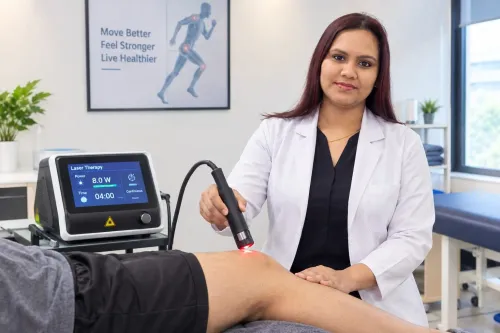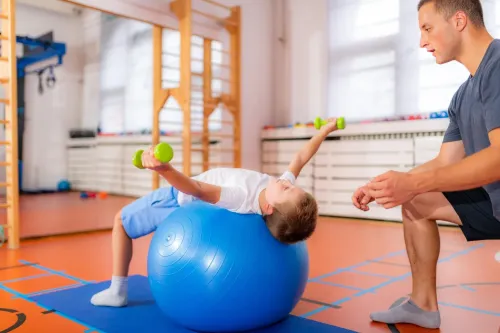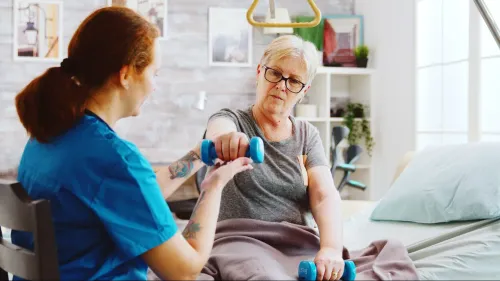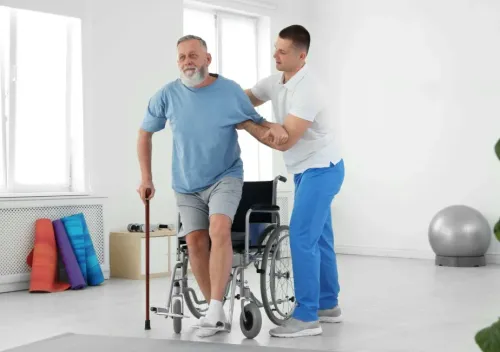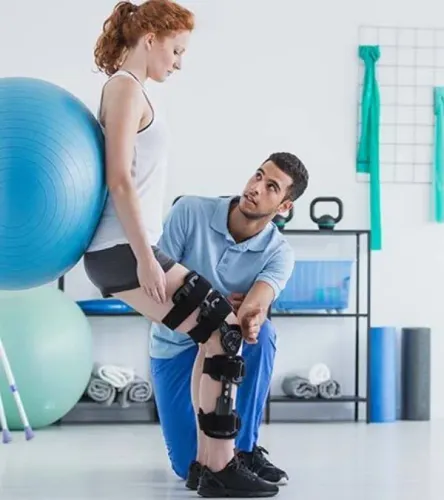
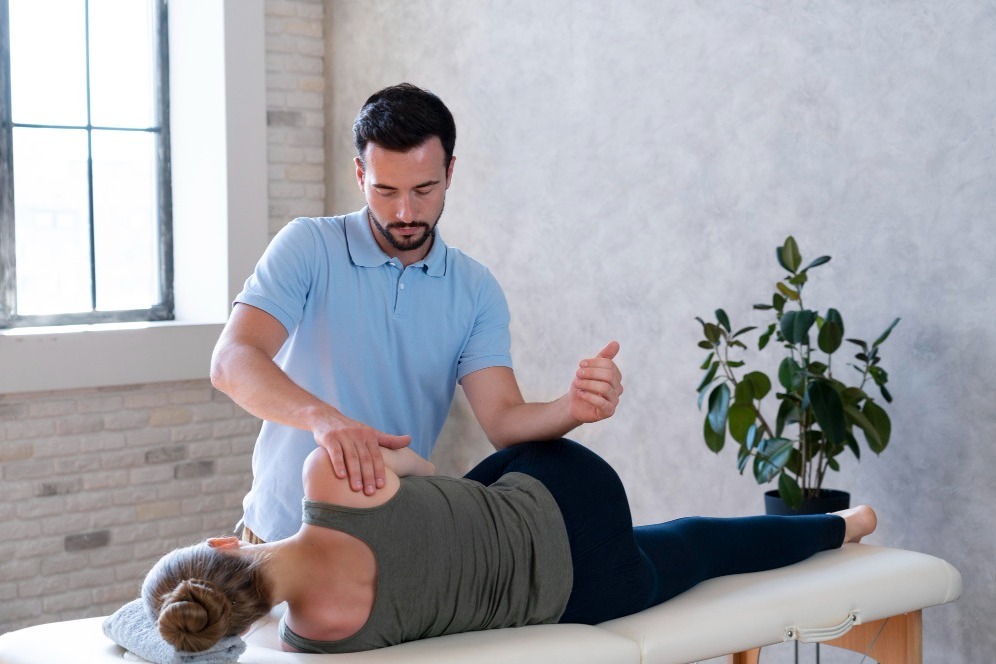
Patients seeking physiotherapy often encounter two broad approaches: hands-on treatment and active exercise. Manual Therapy involves techniques performed by a physiotherapist, while exercise-based rehabilitation requires the patient to actively work on movement, mobility, strength, or control.
They are not necessarily competing approaches. In suitable cases, they can play complementary roles within the same rehabilitation programme.
What Does Manual Therapy Do?
Manual techniques can include specific joint and soft-tissue approaches selected after assessment.
Depending on the musculoskeletal condition, they may be used to help address stiffness, restricted movement, or symptoms that make exercise difficult.
However, receiving hands-on treatment alone does not automatically build strength or physical capacity.
That distinction is important.
Exercise Creates Active Adaptation
Exercise requires the body to participate.
A progressive programme may target:
- Muscle strength
- Joint mobility
- Flexibility
- Movement control
- Balance
- Endurance
- Functional tolerance
These changes generally require repetition and progression over time.
Someone with shoulder stiffness, for instance, may find certain manual techniques useful as part of treatment, but appropriate exercises may still be needed to maintain mobility and rebuild strength.
When Can the Combination Be Useful?
Consider a person in Vadodara experiencing restricted neck movement and discomfort during desk work.
If assessment indicates that manual techniques are appropriate, they may form one part of treatment. The programme may then include mobility exercises, strengthening, activity modification, and workstation advice.
This creates a broader strategy than relying exclusively on passive treatment.
The same principle can apply to selected back, shoulder, knee, or other musculoskeletal conditions.
Avoid Looking for a Single 'Best' Technique
Physiotherapy works most effectively when treatment is selected according to the clinical problem rather than preference for one technique.
A person with significant weakness may need greater emphasis on progressive exercise. Someone with a particular movement restriction may benefit from a different combination.
At Physiospace By Dr. Pratiksha, physiotherapy programmes in Vadodara can incorporate appropriate manual techniques alongside active rehabilitation when indicated by assessment.
Patients can make treatment discussions more useful by asking what each intervention is intended to achieve. If a technique provides short-term symptom improvement, what should be done afterward to improve function? If an exercise is prescribed, what movement or capacity is it targeting?
Understanding the purpose of treatment encourages active participation.
Manual therapy can be useful in selected situations, but long-term rehabilitation often requires the patient to become an active participant. Combining appropriate hands-on care with progressive movement and strengthening can provide a more complete approach than treating the two methods as alternatives.
Keywords