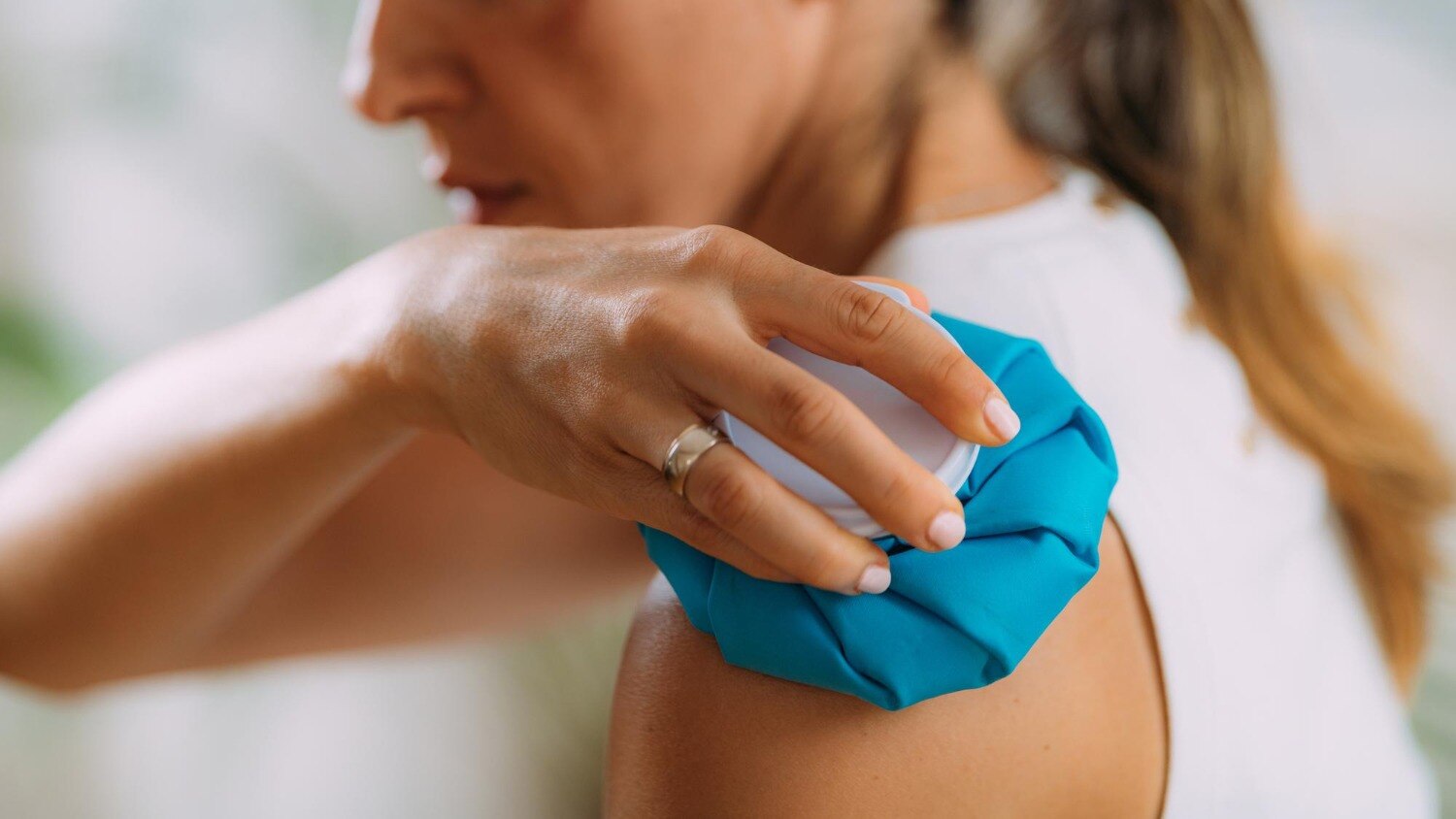
A hot pack is not automatically right for pain, and an ice pack is not automatically safer after every injury. The useful choice depends on when the problem started, whether swelling or stiffness dominates, how your skin and circulation respond, and what movement needs to improve; by the end, you will know what to ask for and how heat or cold can be combined with hands-on treatment.
Key takeaways
- Use cold for fresh swelling; choose heat for stiffness and muscle guarding.
- Place a towel between your skin and any hot or cold pack.
- Stop treatment if skin becomes numb, blotchy, blistered, or intensely painful.
- Pair manual therapy with exercises that restore strength, movement, and daily function.
Heat and cold create different treatment effects
Heat warms superficial tissues, increases local circulation, and can reduce muscle guarding, stiffness, and pain enough to make movement easier. Cold lowers local blood flow and temporarily numbs pain, making it better suited to a freshly irritated or swollen area. Neither modality repairs the underlying injury by itself.
| Option | Main treatment effect | Symptoms or situations it suits |
|---|---|---|
| Heat | Relaxes guarded muscles and eases stiffness | Muscle spasm, chronic joint pain, reduced mobility, and uncomplicated low-back pain |
| Cold | Reduces pain, local blood flow, and swelling | Fresh sprain, acute swelling, pain after exercise, and short-term post-surgical symptom control |
| Manual therapy with heat or cold | Uses temporary symptom relief to support hands-on movement | Restricted joints, painful muscle tension, or movement limited by guarding |
Heat therapy physiotherapy in vadodara should depend on the body region, diagnosis, skin condition, circulation, sensation, and treatment goal—not on Vadodara’s warm climate. Avoid heat over numb skin, an actively inflamed area, or unexplained swelling because a hot pack can worsen irritation or cause a burn.
For anyone comparing heat cold therapy manual therapy in vadodara, use the symptom response as the guide: heat often suits stiffness and tightness, while cold often suits recent swelling and post-activity pain.
Cold is unsuitable when sensation or circulation is impaired, and either option needs medical review after surgery if redness, drainage, fever, calf pain, or worsening pain appears.
Use the injury timeline to choose heat or cold
During the first 24 to 72 hours after a fresh sprain, strain, bruise, or surgery, start with cold if swelling, throbbing, or heat at the area is the main problem. Cold therapy for pain in Vadodara is short-term symptom control; it does not repair a torn ligament or replace medical assessment.
| Injury timeline | Starting choice | Decision rule |
|---|---|---|
| First 24–72 hours | Cold | Use it when swelling or acute pain dominates; stop if numbness hides worsening symptoms. |
| After swelling settles | Heat | Choose it for stiffness, muscle guarding, or limited movement before gentle activity. |
| Persistent or worsening symptoms | Assessment | Do not keep alternating packs; identify the injury and adjust treatment. |
Later recovery is not a fixed “heat phase.” Use heat before movement when stiffness limits walking, exercise, or joint mobility, then use prescribed exercises to build function. Use cold after activity when a known injury becomes painful or mildly swollen.
For uncomplicated acute or subacute low-back pain, superficial heat can improve short-term comfort and activity, while evidence for cold is less established.
Heat therapy physiotherapy in Vadodara should depend on your diagnosis, skin condition, circulation, sensation, and treatment goal—not the hot local climate. After surgery, follow the surgeon’s instructions. Seek medical assessment for wound drainage, fever, spreading redness, calf pain, sudden breathlessness, or pain that is worsening.
A clinician should screen first if you have diabetes-related neuropathy, reduced sensation, poor circulation, infection, or fragile skin.
Apply heat or cold without injuring your skin
Limit heat to 15–20 minutes and cold to 10–15 minutes per application. Place a towel between your skin and the pack; never sleep with a heating pad or ice pack in place.
Check the skin halfway through, then wait until it returns to its usual colour and temperature before repeating treatment, usually after two to three hours. The same limits apply to cold therapy for pain in Vadodara, despite a warm climate.
Stop home treatment and seek medical advice when:
- Skin becomes markedly pale, blue, blistered, painful, or excessively numb.
- Pain, swelling, or movement worsens instead of settling after treatment.
- Symptoms are not improving after 48–72 hours, or keep returning when the pack is removed.
- You have reduced sensation, poor circulation, broken skin, or cannot judge temperature safely.
- After surgery, the wound drains, redness spreads, fever develops, or you develop calf pain or sudden breathlessness.
Follow the surgeon’s and physiotherapist’s instructions after an operation. A hot pack can burn numb skin, while cold can hide overexposure through temporary numbness. Do not keep repeating packs to avoid an assessment when the problem is worsening.
How manual therapy fits around heat or cold
A physiotherapist uses heat or cold to make manual therapy more tolerable, not to replace movement assessment or exercise. For manual therapy pain relief, the aim is to reduce guarding and sensitivity enough to restore useful movement—not to prove that a joint was “put back in place.”
1. Before manual therapy, the physiotherapist checks the working diagnosis, sensation, skin, circulation, swelling, medication, medical history, and red flags. Heat may ease stiffness before mobilisation; cold may settle an acute flare or swelling. The choice depends on the body region and treatment goal, not Vadodara’s warm climate.
2. During manual therapy, the therapist reassesses pain, muscle guarding, range of motion, and the quality of movement. They adjust pressure and technique if numbness from cold hides excessive force, or if heat increases throbbing or swelling. The target is a safer, more comfortable movement—not a temporary drop in the pain score alone.
3. After manual therapy, the therapist tests whether the change carries into walking, reaching, standing, lifting, or another relevant task. They may use cold after an acute or exercise-related flare, then prescribe graded exercise and activity progression. Lasting improvement matters more than feeling better for an hour.
A heat cold therapy manual therapy in Vadodara plan needs review if pain keeps worsening, function does not improve, or swelling, wound drainage, fever, calf pain, or sudden breathlessness appears after surgery. Seek medical assessment instead of repeating packs.
Choose a treatment plan based on diagnosis and function
Pain relief during one appointment is not enough: the plan is helping only if movement and daily activity improve.
Before combining modalities with hands-on treatment, a Vadodara physiotherapy assessment should establish a working diagnosis and the person’s functional goal. It should also review surgery instructions, medications, medical history, skin condition, circulation, and sensation; numbness can hide a burn from a hot pack.
For heat cold therapy manual therapy in Vadodara, the choice must match the body region, diagnosis, and goal—not the local weather. After surgery, follow the surgeon’s and physiotherapist’s instructions.
| Assessment finding | What it changes | How to judge progress |
|---|---|---|
| Working diagnosis and goal | Select heat, cold, manual therapy, and exercise for that problem | Better range, walking, lifting, or sleep |
| Skin, sensation, and circulation | Avoid or modify heat or cold over numb skin, poor circulation, or damaged skin | No lasting redness, blistering, or altered sensation |
| Fever, wound drainage, calf pain, sudden breathlessness, or worsening pain | Stop self-treatment and seek medical assessment | Symptoms settle under appropriate care |
| Baseline function and activity tolerance | Set measurable exercise and activity progression | More repetitions, longer walks, or easier daily tasks |
Treat manual therapy pain relief as a short-term window for exercise, not proof that the cause is corrected. For osteoarthritis and uncomplicated back pain, the programme should include strengthening, aerobic activity, and self-management.
At Physiospace By Dr. Pratiksha, ask for a documented baseline and a planned reassessment rather than judging success by how comfortable you feel immediately after treatment.
Related service
Electrotherapy & Advanced Modalities Physiotherapy in Vadodara Heat & Cold Therapy is an effective physiotherapy treatment method used to reduce pain, manage swelling, improve blood... View service → |
Frequently asked questions
Should you use heat or cold for a painful injury?
Use cold for a freshly irritated, swollen area. Use heat for stiffness, muscle guarding, or pain that makes movement difficult without significant swelling.
How do you apply heat or cold without damaging your skin?
Wrap the pack in a towel, check your skin regularly, and stop if you develop numbness, blotchy colour, burning, blistering, or worsening pain.
When should manual therapy be used with heat or cold?
A physiotherapist may use heat before hands-on treatment to reduce stiffness, or cold afterward when treatment leaves a painful or irritated area. The sequence depends on your diagnosis and response.
Can heat or cold therapy repair the cause of pain?
No. Heat and cold provide symptom relief. A complete plan also addresses the diagnosis, joint or tissue function, strength, movement, and the activities that aggravate pain.
Keywords