Hands-on knee treatment can ease stiffness, improve movement and make exercise more comfortable, but it is not suitable for every knee problem or sufficient as a complete rehabilitation plan. You will learn what manual therapy includes, when assessment or medical referral comes first, how a session works, and how to compare treatment plans and costs.
Key takeaways
- Manual therapy can improve knee movement, but it does not replace diagnosis.
- Delay hands-on treatment after major injury, severe swelling, fever, or suspected fracture.
- Ask how assessment findings determine the techniques, exercises, and appointment schedule.
- Compare total knee rehabilitation cost, not only the price of one session.
What manual therapy does for different types of knee pain
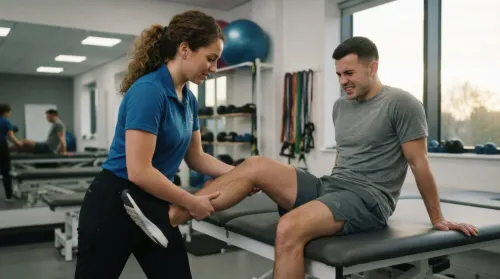
Manual therapy means using the hands to improve how the knee and nearby tissues move, not simply rubbing the painful area. A physiotherapist may use gentle joint mobilisation, patellar mobilisation, soft-tissue work, and hands-on techniques for muscles or tendons.
The aim is easier bending, straightening, walking, or stair use so you can perform active rehabilitation more effectively.
The search phrase knee pain for manual therapy in vadodara covers several different problems:
| Problem | How hands-on care may help | What still matters |
|---|---|---|
| Restricted motion after surgery | Mobilisation may gradually improve knee bending or straightening | Surgeon’s precautions, swelling control, and prescribed exercises |
| Patellofemoral pain | Patellar or soft-tissue techniques may provide short-term comfort during movement | Progressive quadriceps and hip strengthening, plus activity adjustment |
| Osteoarthritis stiffness | Joint and surrounding-tissue techniques may ease stiffness temporarily | Tailored strengthening, aerobic activity, weight-bearing practice, and pacing |
| Selected sports injuries | Hands-on treatment may address stiffness or soft-tissue restriction after assessment | Load management and a graded return to sport |
Manual therapy is usually an adjunct, not a stand-alone cure. Progress is judged across repeated visits by walking, strength, range of motion, stair use, and daily participation; pain can improve without disappearing completely.
Do not treat a suspected fracture, locked knee, major instability, acute severe swelling, infection, or serious ligament or meniscus injury with routine hands-on care before assessment.
When hands-on knee treatment should wait for assessment
A suspected fracture, locked knee, major instability, or rapidly increasing swelling needs assessment before hands-on treatment. Mobilising a damaged joint too early can worsen pain, bleeding, or tissue injury.
| Warning sign or factor | Why manual therapy waits | Appropriate next step |
|---|---|---|
| Fall, twist, direct blow, inability to bear weight, or marked tenderness | A fracture or significant structural injury needs exclusion | Urgent medical assessment and imaging if indicated |
| Knee locked in one position, catching with inability to straighten, or repeated giving-way | A displaced meniscus injury or major ligament injury may need specialist care | Clinical examination before mobilisation |
| Severe swelling soon after injury or a hot, red knee with fever | This can indicate bleeding, infection, or serious inflammation | Prompt medical review; do not massage the joint |
| Calf swelling, warmth, tenderness, or sudden breathlessness | These are warning signs for deep-vein thrombosis or embolism | Seek urgent medical help |
| Recent surgery, suspected ligament or meniscus tear, osteoporosis, blood-thinning medication, or cancer history | Treatment pressure and movement must match medical restrictions | Share the full history and follow the surgeon or doctor’s plan |
Anyone seeking knee pain physiotherapy in vadodara should provide the injury date, swelling pattern, medication list, and surgical history. Imaging is not automatic, but a clinician may request it when the result could change treatment.
Once serious causes are excluded, manual therapy is usually an adjunct to strengthening, range-of-motion work, and activity modification—not a stand-alone cure. Stop if treatment causes sharp pain, increased swelling, numbness, or worsening instability.
How a physiotherapist decides whether manual therapy is appropriate
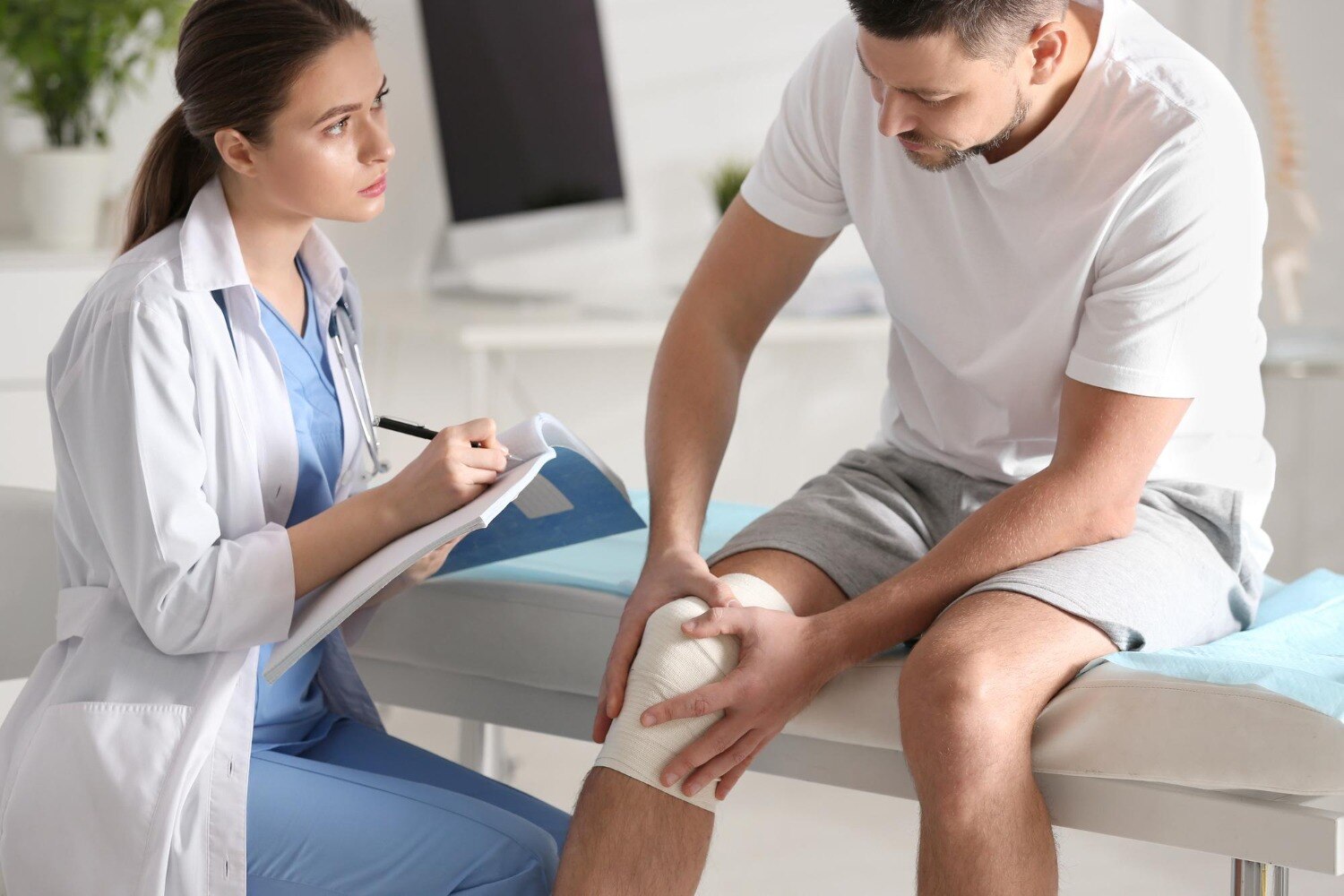
Pain location alone does not identify the structure causing knee symptoms. During knee pain physiotherapy in Vadodara, the physiotherapist first asks how the pain began, what activities worsen it, whether the knee gives way or locks, and whether surgery, injury, illness, or changing activity preceded it.
The physical assessment usually includes:
- Watching you walk, turn, squat, sit-to-stand, and use stairs
- Checking knee swelling, tenderness, temperature, alignment, and visible muscle wasting
- Measuring active and passive knee range of motion
- Testing quadriceps, hamstrings, hip muscles, and calf strength
- Examining the hip, ankle, and foot for problems that alter knee loading
- Using appropriate ligament and meniscus tests when the history suggests injury
- Reproducing symptoms with a relevant functional movement
The pattern matters more than one positive test. Pain behind or around the kneecap during stairs and squats, combined with movement-control problems, points toward patellofemoral involvement; stiffness with reduced motion and activity-related aching fits a different pattern. Local tenderness, weakness, instability, or pain at a tendon changes the treatment decision.
The physiotherapist also screens for red flags, including suspected fracture, infection, a locked knee, major instability, and new calf swelling or breathlessness after reduced mobility. Imaging is not automatic; a scan or X-ray is considered when it could change management or reveal serious disease.
If manual therapy is appropriate, it becomes an adjunct to strengthening, mobility work, and activity changes. Progress is judged through walking, stairs, strength, and daily function over repeated visits—not by temporary relief alone.
What happens in a knee manual-therapy appointment
Expect the first hands-on session to begin with a brief review, not immediate manipulation. The physiotherapist will confirm your pain pattern, recent swelling or activity changes, then recheck movement and function before choosing a technique. You should be told what will happen and asked whether the pressure feels acceptable.
1. The therapist may observe walking, a sit-to-stand, a squat or stair movement to establish a practical baseline.
2. Treatment may include gentle joint mobilisation, patellar movement, soft-tissue work, or hands-on treatment for nearby muscles and tendons. The technique should match the restriction found during assessment.
3. You should report sharp pain, increasing swelling, numbness or a feeling of instability immediately. Discomfort from pressure is different from pain that worsens your symptoms.
4. The therapist will retest a movement after treatment, such as knee bending, straightening or walking. A short-term change helps guide the plan; it does not prove the problem is cured.
5. You will usually receive active exercises, such as quadriceps strengthening, range-of-motion work or balance practice, with clear repetitions and frequency. Manual therapy should support this programme, not replace it.
At follow-up, the therapist compares walking, stair use, strength and daily activity with the baseline and adjusts the exercises. Pain does not need to disappear for progress to count. Ask how many visits are planned, what each includes and when the programme will be reviewed; that makes knee rehabilitation in Vadodara easier to compare.
How to judge a treatment plan, clinic and total cost
A sound plan uses manual therapy to make movement easier, then uses exercise to keep the improvement. For knee rehabilitation in Vadodara, judge success by walking, stair use, strength and daily participation—not by pain relief after one session.
Knee osteoarthritis care should include tailored strengthening and aerobic exercise; hands-on treatment alone is not a durable substitute.
| Approach | What you receive | What to expect |
|---|---|---|
| Manual therapy alone | Mobilisation, soft-tissue work or patellar techniques | Short-term movement or pain change, with limited carry-over if you do not exercise |
| Active rehabilitation | Strength, range-of-motion, balance and activity work | Gradual improvement that requires regular practice between visits |
| Combined plan | Hands-on treatment followed by targeted exercise | Manual techniques support exercise, while reassessment shows whether the plan works |
Before choosing a clinic, ask these questions:
- Who will assess you, and will the first visit include history, gait, range of motion, strength, swelling and functional testing?
- What exercises will you perform at home, how often, and when will the physiotherapist reassess progress?
- Does the quoted fee include assessment, supervised exercise, manual treatment, written instructions and follow-up?
- What is the per-visit price and estimated episode-of-care cost? Knee pain treatment cost in Vadodara has no single standard tariff and changes with session count, post-surgical or sports complexity, home visits and added modalities.
- At Physiospace By Dr. Pratiksha, ask whether the quoted service separates hands-on treatment from supervised rehabilitation, so you can compare like with like.
Related services
Pain Relief Therapy Physiotherapy – Expert Treatment in Vadodara Knee pain can make everyday activities such as walking, climbing stairs, sitting, standing, or... View service → |
Orthopedic Rehabilitation Physiotherapy Service Description for SEO Arthritis Care Physiotherapy in Vadodara provides specialized physiotherapy treatment to manage arthritis... View service → |
Frequently asked questions
What does manual therapy do for different types of knee pain?
A physiotherapist may use joint mobilisation, patellar mobilisation, soft-tissue work, or hands-on muscle and tendon techniques based on the pain source and movement limits.
When should hands-on knee treatment wait for assessment?
Wait for assessment after a major injury, suspected fracture, sudden locking, severe swelling, fever, or rapidly worsening pain before starting hands-on treatment.
How does a physiotherapist decide whether manual therapy is appropriate?
The physiotherapist reviews your history, observes walking and movement, checks strength and range of motion, and uses those findings to select or avoid manual therapy.
What happens during a knee manual-therapy appointment?
The appointment usually includes an assessment, explanation of findings, hands-on treatment when suitable, reassessment, and exercises or activity guidance for home.
How should you compare knee pain treatment cost in Vadodara?
Compare the assessment fee, per-session price, expected number of visits, home exercises, reassessments, and travel or equipment costs rather than one quoted session alone.
Keywords