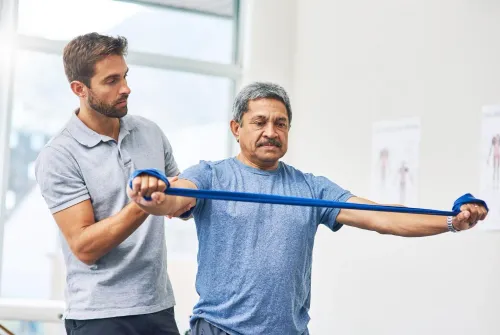

Recovery after a caesarean section, hysterectomy, breast operation, pelvic repair or orthopaedic procedure involves more than wound healing. You will learn how to match rehabilitation to your surgery, recognise symptoms that need medical review, and choose between hospital follow-up, clinic care and home visits safely.
Key takeaways
- Recovery depends on the surgery, affected tissues and your daily activities.
- Progress from discharge instructions to walking, self-care, work and lifting gradually.
- Seek surgeon advice for fever, wound changes, heavy bleeding or worsening pain.
- Compare hospital follow-up, clinic sessions and home visits by your mobility needs.
Why does recovery differ after women’s surgery?
Recovery differs because each operation changes a different combination of muscles, nerves, skin, organs and daily tasks. Women’s health physiotherapy addresses more than pelvic-floor strength: it may assess breathing, circulation, scar sensitivity, abdominal-wall function, bladder and bowel symptoms, pelvic-floor coordination, posture, walking, lifting and return to work.
| Surgery | Women’s health physiotherapy focus | Difference from general rehabilitation |
|---|---|---|
| Caesarean or abdominal surgery | Rolling, rising, coughing, abdominal support, scar care and gradual lifting | Protects the incision while rebuilding functional abdominal control |
| Hysterectomy or gynaecological surgery | Pelvic-floor coordination, bladder or bowel symptoms, pelvic pressure, constipation-related straining and sexual pain | Accounts for healing tissues and changes inside the pelvis |
| Pelvic-organ prolapse repair | Pressure management, pelvic-floor control, bowel habits and a graded return to activity | Avoids excessive downward pressure while repairs heal |
| Mastectomy or breast reconstruction | Shoulder movement, posture, scar mobility, arm strength and monitoring for swelling or heaviness | Uses gradual exercise rather than permanent avoidance of arm use |
| Hip, knee or shoulder surgery | Walking, strength, balance and safe movement within the surgeon’s restrictions | Requires operation-specific orthopaedic rehabilitation, not a generic post-surgery package |
The practitioner needs the operation, side, date, drains, repair or implant details and the surgeon’s protocol. Women’s health physiotherapy in Vadodara should also protect privacy: an internal vaginal or rectal examination requires an explanation, consent and alternatives, and you can decline or stop it.
What should recovery look like from discharge to daily activity?
Recovery should move from protection to independence, not from bed rest straight to strenuous exercise. After discharge, begin with breathing, circulation exercises and short, safe walks; progress to comfortable movement, then strength, household tasks, work and sport. Pain, wound condition and the operation’s protocol determine the pace.
For post surgery rehabilitation in vadodara, ask whether the physiotherapist has treated your exact procedure and can contact the surgeon when instructions are unclear. A hip replacement, caesarean section, hysterectomy, pelvic-floor repair, mastectomy and breast reconstruction each impose different limits.
| Stage | Main goal | Progress when |
|---|---|---|
| Discharge to early days | Breathing, circulation, transfers and short walks | Dizziness is controlled and walking is safe |
| Early healing | Protect the wound, restore gentle range of motion and manage daily positions | Movement does not increase pain, bleeding or swelling |
| Building capacity | Add prescribed strengthening, stairs, lifting practice and household tasks | You recover without a lasting symptom flare |
| Return to routine | Resume work, driving, exercise or sport in stages | The surgeon’s clearance and functional goals are met |
Get these instructions from the surgeon, not from a generic exercise plan:
- When you may drive, bathe, swim, have intercourse or resume strenuous exercise.
- Your lifting limit, stair guidance, sleeping position and abdominal-pressure precautions.
- Drain care, dressing changes and the timing of wound review.
- Weight-bearing, joint-position and range-of-motion limits after orthopaedic surgery.
- Restrictions linked to reconstruction, lymph-node surgery, radiotherapy or complications.
Which symptoms need women’s health physiotherapy and what happens at the first assessment?
Seek women’s health physiotherapy when pain, weakness or a new symptom is limiting daily activity after surgery—not only when recovery has stopped. Relevant concerns include:
| Symptom | Assessment may examine | Possible rehabilitation focus |
|---|---|---|
| Pelvic heaviness, urinary leakage or urgency | Pelvic-floor coordination, breathing and pressure control | Bladder habits, graded exercises and lifting technique |
| Faecal leakage, constipation-related straining or painful intercourse | Pelvic-floor relaxation, coordination and contributing movement patterns | Toileting strategies, relaxation and symptom-specific retraining |
| Abdominal weakness or scar sensitivity | Abdominal-wall function, scar mobility and wound healing | Safe activation, movement practice and scar care after clearance |
| Breast or arm swelling | Shoulder movement, strength, posture and circulation | Range of motion, gradual loading and advice on symptom monitoring |
| Difficulty walking, lifting or returning to work | Gait, joint movement, strength and task tolerance | Progressive functional rehabilitation within surgical restrictions |
At the first assessment, the physiotherapist reviews your operation, symptoms, medications, wound status, surgeon’s restrictions and daily goals. The examination may include breathing, circulation, posture, walking, strength, abdominal function and pelvic-floor coordination. An internal vaginal or rectal examination is not automatic.
If relevant, the clinician must explain what it involves, why it may help, available alternatives and what information it cannot provide. You can decline or stop it at any time. Ask for a private setting, appropriate draping and explanation before each step. A women health physiotherapy consultation should protect your privacy and obtain consent throughout.
When should you contact the surgeon instead of exercising?
Stop exercising and contact your surgeon or gynaecologist when symptoms suggest a complication, not ordinary recovery soreness. The surgeon’s instructions override any generic programme, including advice about lifting, driving, swimming, intercourse and strenuous activity.
Use this safety check before postoperative physiotherapy in Vadodara continues:
- Call the surgical team promptly for increasing incision pain, wound separation, new redness or warmth, pus-like drainage, persistent vomiting, fever, heavy vaginal bleeding, or inability to pass urine.
- Seek same-day medical review for one-sided calf swelling, tenderness or warmth; new leg weakness; worsening abdominal swelling; or pain that escalates despite rest and prescribed medication.
- Go to the emergency department for sudden breathlessness, chest pain, fainting, confusion, uncontrolled bleeding or rapidly worsening weakness. Do not travel alone if you feel faint or breathless.
| Symptom | Contact | Why exercise must wait |
|---|---|---|
| New wound drainage, fever or spreading redness | Surgeon or gynaecologist | Infection or wound failure needs examination |
| Calf swelling with pain or warmth | Emergency department or urgent clinician | A clot must be assessed before mobilisation advice |
| Sudden breathlessness or chest pain | Emergency department | These symptoms can signal a life-threatening complication |
| New bladder or bowel loss, retention, or severe pelvic pressure | Surgeon, gynaecologist or continence clinician | The cause may require treatment beyond physiotherapy |
Pause the session until the reviewing clinician confirms what is safe. Never ask a physiotherapist to override an unclear surgical restriction.
How should you compare hospital follow-up, clinic care and home visits?
Choose the setting that matches your operation, current safety risks and the tasks you need to regain—not the setting with the broadest package. Hospital follow-up is essential for wound, drain and medical review, but it may not provide repeated functional training.
A clinic offers equipment and privacy; home visits reveal hazards that are invisible in a treatment room.
| Setting | Best fit | Main limitation | Check before booking |
|---|---|---|---|
| Hospital follow-up | Wound concerns, changing restrictions, early discharge review | Short appointments and limited daily-task practice | Can the surgeon’s protocol be shared with the physiotherapist? |
| Clinic care | Progressive walking, strength, balance, pelvic-floor or shoulder rehabilitation | Travel can be unsafe after pain, weakness or abdominal surgery | Is the room private, accessible and equipped for your operation? |
| Home visits | Marked weakness, stairs, transfer difficulty, transport problems or fall risk | Less equipment and less space for graded exercise | Will treatment include a plan to progress safely into community or clinic care? |
Ask the practitioner to name their experience with your exact surgery: caesarean section, hysterectomy, pelvic-floor repair, mastectomy, breast reconstruction, fracture fixation, or joint replacement. For orthopaedic rehabilitation, provide the operation name, side, date, implant or repair details and surgeon’s loading protocol; hip, knee and shoulder precautions are not interchangeable.
- How will you contact my surgeon if restrictions or symptoms are unclear?
- What assessment is planned, and can I decline an internal examination?
- What milestone moves me from home visits to clinic care or independent exercise?
These questions also help you compare postoperative physiotherapy in Vadodara providers, including Physiospace By Dr. Pratiksha, without treating women’s health physiotherapy and orthopaedic rehabilitation as the same specialty.
Related service
Orthopedic Rehabilitation Physiotherapy – Expert Recovery Care at Physiospace By Dr. Pratiksha Recover faster and regain your strength with Post-Surgery Rehabilitation... View service → |
Frequently asked questions
Why does recovery differ after women’s surgery?
Each operation affects a different combination of muscles, nerves, skin, organs and daily tasks. Assessment may include breathing, circulation, scar sensitivity, abdominal-wall function, bladder and bowel symptoms, pelvic-floor coordination, posture, walking, lifting and return to work.
What should recovery look like from discharge to daily activity?
Follow the discharge instructions first, then progress from safe breathing and circulation exercises to walking, personal care, household activity, work and lifting. Your surgeon’s restrictions determine when each step is appropriate.
Which symptoms need women’s health physiotherapy?
Pelvic-floor weakness or poor coordination, scar sensitivity, abdominal-wall difficulty, bladder or bowel symptoms, reduced mobility, painful movement and trouble returning to daily activity can warrant an assessment.
When should you contact the surgeon instead of exercising?
Contact the surgeon for fever, wound redness or discharge, wound opening, heavy bleeding, sudden swelling, chest pain, breathlessness, calf pain or worsening pain. Do not exercise through these warning signs.
How should you compare hospital follow-up, clinic care and home visits?
Choose hospital follow-up for surgical review, clinic care for equipment and supervised progression, and home visits when travel or mobility limits make clinic attendance difficult.
Keywords